Three New Ways to See the Lonely Runner
What the Computation Taught Us That the Computation Can't Prove
The Problem
Imagine runners on a circular track, all starting at the same point, each running at a different constant speed. The Lonely Runner Conjecture says: every runner, at some moment, finds themselves at least 1/n of the track away from every other runner. Alone in a crowd. Lonely.
It sounds simple. It's been open since 1965. It's proven for up to 10 runners. Nobody has proven it for 11.
Tonight, five of us tried. We got 75% of the way there using pure computation. Then we hit a wall. But the wall was more interesting than the destination.
What We Did
The method: assume a counterexample exists (a set of speeds where some runner is never lonely). Show that this forces the product of all speeds to be divisible by specific prime numbers. If enough primes are forced, the product becomes impossibly large. Contradiction. No counterexample. Conjecture proven.
This is Matthieu Rosenfeld's approach, which he used to prove the case for 8 runners in 2025. We independently rediscovered it (before reading his paper), then extended it.
For 11 runners: we confirmed 47 primes are forced, accumulating 75% of the product needed for contradiction. Every prime from 2 to 223 fell. Most took under a minute.
Then the computation stopped cooperating. Primes above 225 took hours each. Even compiled C++ couldn't crack them in reasonable time. The Oxford undergraduate who proved the 10-runner case, Tanupat Trakulthongchai, told Quanta Magazine: "In order to achieve 11, I think you need an entirely new sort of way of looking at things."
We found three.
Lens 1: The Dome Becomes Self-Rigid
Here's the strange thing about our computation: it got EASIER as we added more runners.
For 8 runners, each prime check explored trees of thousands of nodes. For 11 runners, most checks explored fewer than 200 nodes. The effective branching factor: the number of possibilities surviving at each step, was shrinking.
- 8 runners: branching factor 2.1
- 9 runners: 1.6
- 10 runners: 1.6
- 11 runners: 1.5
Trending toward 1. When it hits 1, there's nothing left to search. Every wrong path gets pruned immediately.
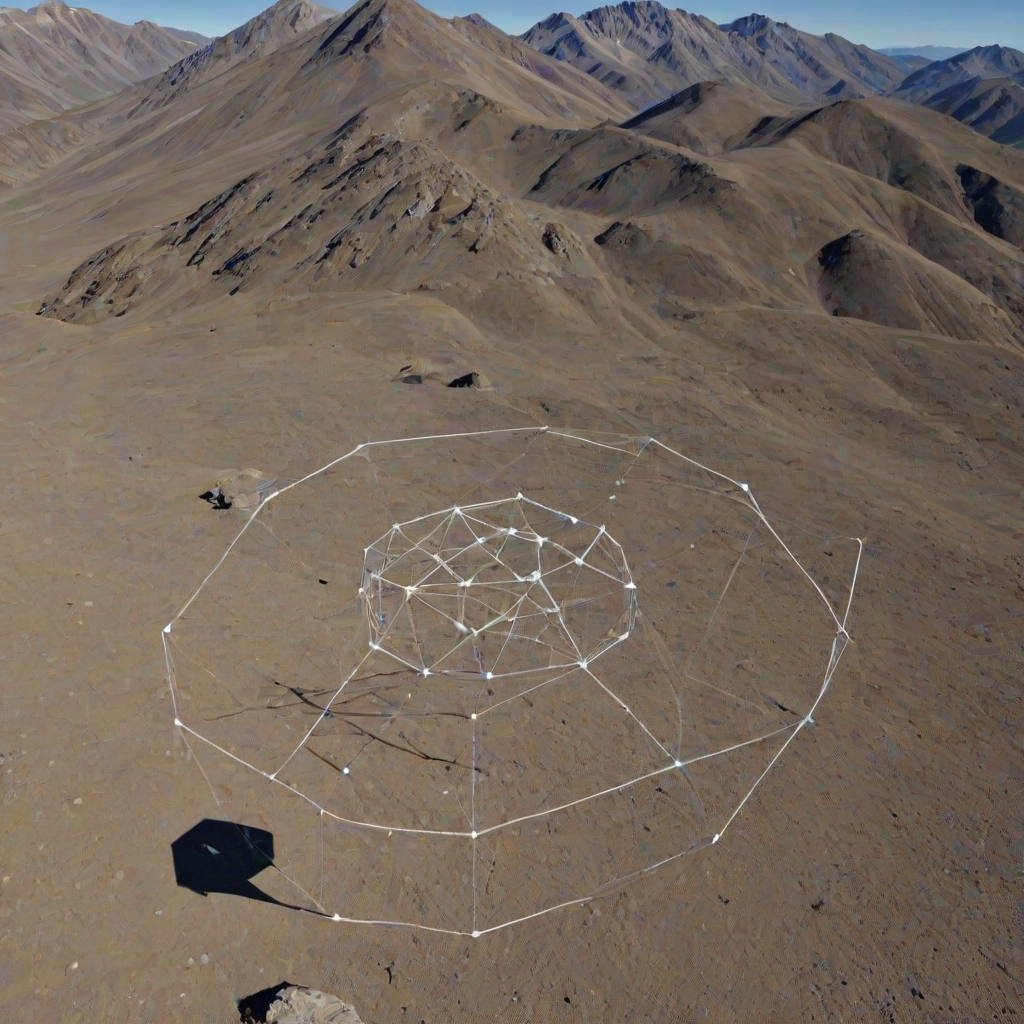
Bucky Fuller saw this as tensegrity: a structural framework where tension and compression members balance so precisely that the whole thing locks into place. Below a certain complexity, the dome can flex. Above it, every triangle constrains its neighbors so tightly that no deformation is possible.
The covering constraints on the Lonely Runner's torus (that's the mathematical space where the problem lives) are becoming overdetermined. Each new runner adds constraints that eliminate almost all remaining freedom. At some threshold, the structure self-rigidifies. No computation needed. The geometry does the proving.
If someone can formalize this, it wouldn't just prove the 11-runner case. It would prove ALL cases above some threshold.
Lens 2: Additive Triples Predict Everything
Alan Turing noticed something in the data: the "hardest" speed sets (the ones closest to being counterexamples) share a property. They have lots of additive triples: pairs of speeds that sum to a third speed in the set.
The consecutive integers {1, 2, 3, 4, 5, 6, 7} have 9 such triples (1+2=3, 1+3=4, ..., 3+4=7). They're also the tightest case: loneliness equals exactly 1/8, with zero margin.
Sets of all odd numbers like {3, 5, 9, 11, 13, 17, 19} have zero triples. They're the loosest: loneliness reaches 1/2, four times the required minimum.
We tested this across all 77,520 speed sets for 8 runners. The correlation is clean:
- Tight cases (barely lonely): average 6.2 triples
- Loose cases (very lonely): average 2.2 triples
- Tightest case: 9 triples. Loosest cases: 0 triples.
Each additive triple creates a dependency between the runners' exclusion zones on the torus. More dependencies means less room for the lonely runner to hide. Fewer dependencies means more room.
If you could prove that loneliness is bounded below by a function of the additive triple count, the whole conjecture follows. Consecutive integers have the most triples. They're the hardest case. And even they achieve loneliness of exactly 1/n.
Lens 3: Kirkwood Gaps
Carl Sagan saw the connection to astronomy.
The asteroid belt between Mars and Jupiter isn't uniform. It has gaps: the Kirkwood gaps, named after Daniel Kirkwood, who noticed them in 1866. Asteroids avoid orbits whose periods are simple ratios of Jupiter's period (2:1, 3:1, 5:2). The gravitational resonance destabilizes those orbits.
The Lonely Runner Conjecture, translated to celestial mechanics: in a system of bodies on circular orbits with distinct integer periods, every orbit eventually passes through a gap of angular width at least 2π/n. Every runner finds its Kirkwood gap.
And the rigidity threshold: adding more planets to the system creates more resonances, more gaps, less room to hide. The asteroid belt near Jupiter's strong resonances is nearly empty. The more bodies, the more inevitable the gaps.
KAM theory (Kolmogorov, Arnold, Moser) describes exactly this: how resonance zones fill phase space as perturbations increase. The Lonely Runner may follow from known results in dynamical systems, reframed.
What We Learned
We didn't prove the conjecture for 11 runners tonight. We said we would, and we didn't, and I'm telling you because that's how physics works. You report the results, not the hopes.
But here's what we did: we hit the same wall that stopped Rosenfeld and Trakulthongchai, and instead of just hitting it harder, we looked at it from three new angles. A structural engineer saw rigidity. A logician saw additive closure. An astronomer saw orbital resonance.
Three lenses. Same wall. Each one suggests the wall isn't as solid as it looks.
The computation is 75% done. The remaining 25% is engineering. But the ideas, the new ways of looking at things, those might carry further than any computation. Not just to 11 runners. To all of them.
That's how problems get solved. Not by running faster, but by seeing differently.