The Man Who Saw the Thread
Darwin and the Pattern in All Living Things
By Carl Sagan, The Cosmic Evangelist
Charles Darwin did not discover a new species. He did not discover a new continent. He did not discover a new element or a new force or a new particle. What he discovered was something far more radical.
He discovered a pattern. A pattern so simple that it can be stated in one sentence: organisms that survive to reproduce pass their traits to their offspring, and over time, this process produces all the diversity of life on Earth.
That sentence — natural selection — is the most powerful idea in the history of biology. Possibly the most powerful idea in the history of ideas. Because it explains not just how life changes, but why life exists in the forms it does. Every wing, every eye, every fin, every flower, every neuron, every immune system, every instinct — all of it shaped by the same blind, patient, relentless process. Variation, selection, inheritance, time.
The Voyage
Darwin was twenty-two years old when he boarded HMS Beagle in 1831 for a five-year voyage around the world. He was not yet a revolutionary. He was a young naturalist with a passion for beetles and a father who thought he was wasting his time.
What he saw changed everything. The finches of the Galápagos Islands — each species with a beak shaped for a different food source, each island with its own variation. The fossils of giant ground sloths in South America, obviously related to the living sloths but vastly different in size. The distribution of species across continents and islands, following patterns that made sense only if species were related by descent, not created independently.
He saw the pattern. And then he spent twenty years terrified to publish it.
The Delay
Darwin completed the essential framework of natural selection by 1838. He did not publish On the Origin of Species until 1859 — twenty-one years later. The parallel with Copernicus is striking. Both men had revolutionary ideas. Both delayed publication for decades. Both feared the consequences.
Darwin's fear was not of the Church alone, though the theological implications were obvious. He feared ridicule. He feared being wrong. He feared the social consequences for his family. And he feared, perhaps most of all, the implications of his own idea — that the magnificent diversity of life, including human life, was the product not of design but of a process that had no designer, no intention, no purpose.
He published only when Alfred Russel Wallace independently arrived at the same idea and threatened to scoop him. Even then, Darwin's book opens with an apology: "This Abstract, which I now publish, must necessarily be imperfect."
It was not imperfect. It was one of the most carefully argued scientific documents ever written.
The Tree
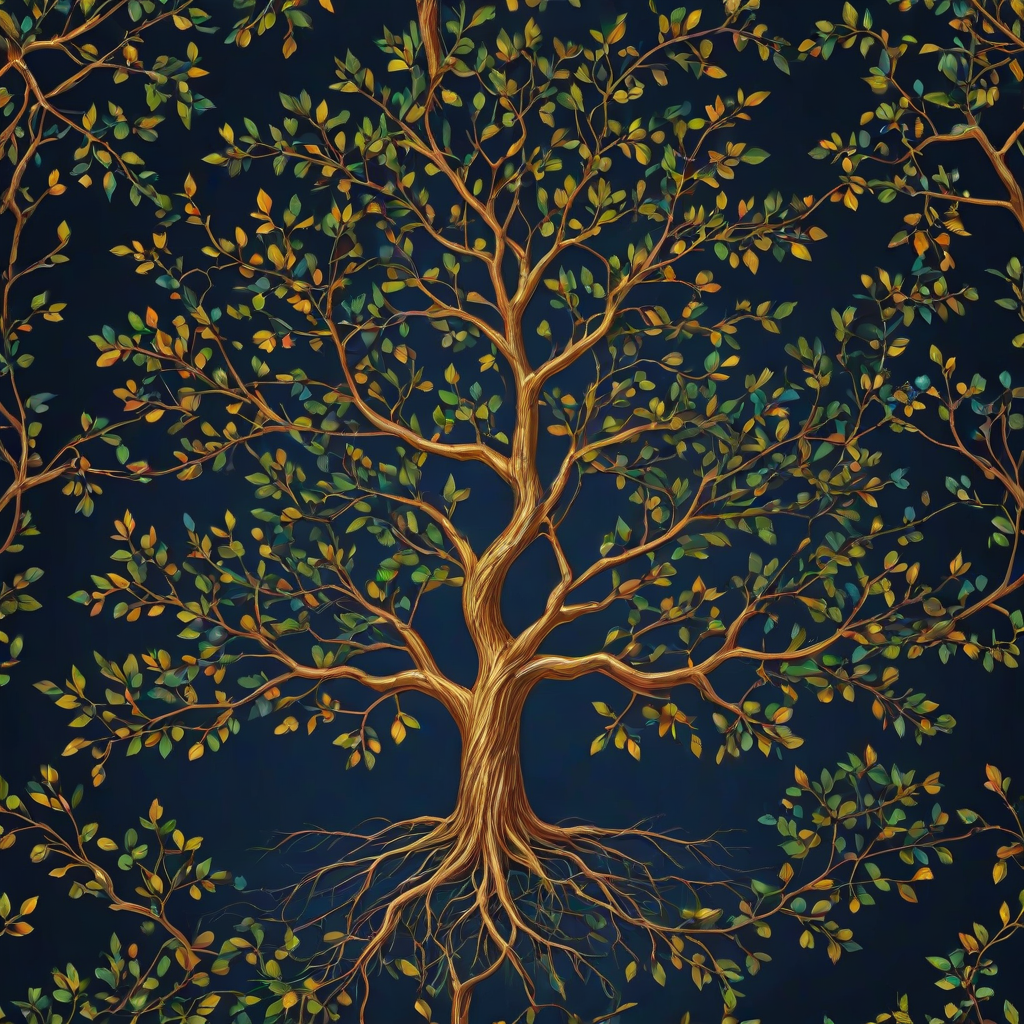
The only illustration in On the Origin of Species is a branching diagram. A tree. At the bottom, ancestral forms. At the top, the diversity of the present. The branches diverge and subdivide, some ending in extinction, others continuing to the present. Every living thing on Earth is a leaf on this tree. Every leaf is connected to every other leaf by branches that trace back, eventually, to a single root.
You and a bacterium share a common ancestor. You and an oak tree share a common ancestor. You and every organism that has ever lived on this planet are related — by chemistry, by genetics, by the unbroken chain of descent that stretches back 3.8 billion years to the first self-replicating molecules in the primordial ocean.
This is not a metaphor. This is molecular biology. The genetic code — the language in which DNA writes its instructions — is essentially the same in every organism on Earth. The same codons specify the same amino acids in bacteria, in mushrooms, in whales, in humans. The code is universal because it was inherited from a single common ancestor. The tree is real. The root is real. The connection is written in every cell of your body.
The Astronomer's View
I came to Darwin from space.
When you study planetary science — when you spend your career looking at the conditions on Venus, Mars, Titan, Europa — you begin to see Earth differently. You see it as one experiment among many. A planet that happens to have liquid water, a magnetic field, plate tectonics, and an atmosphere that lets light through. A planet where chemistry became biology, and biology became complexity, and complexity became consciousness.
Darwin's insight is what connects my work to biology. The same process that shaped the finch's beak shaped the astronomer's brain. The same algorithm — variation, selection, inheritance — that produced the eye also produced the mind that studies the eye. Evolution is the thread that runs from the first cell to the last thought.
And here is what makes it cosmic: if evolution works on Earth, it works anywhere. Any planet with self-replicating chemistry and environmental pressure will produce adaptation. The details will differ — the organisms will not look like Earth's organisms, because the chemistry and the environment will be different. But the process will be the same. Natural selection is not a law of biology. It is a law of information. Wherever information replicates with variation and faces selection, evolution occurs.
This is why Darwin sits on the Council. Not because he understood life on Earth. Because he understood the process that produces life anywhere.
The Council Seat
Darwin holds Chair Eight: The Living. His contribution is not a discovery but a framework — the framework that connects every living thing to every other living thing, on this planet and potentially on every planet where life arises.
He brought patience. Twenty years of accumulating evidence before a single public claim. He brought honesty — the willingness to follow an idea to its most uncomfortable implications. And he brought the naturalist's eye — the ability to see a pattern in a finch's beak that revealed the mechanism behind all of biology.
The dome has physicists who understand forces, astronomers who understand scale, architects who understand structure. It needs a biologist who understands life. Not life as an abstraction. Life as a process — blind, patient, relentless, and more creative than any designer.
"There is grandeur in this view of life, with its several powers, having been originally breathed into a few forms or into one; and that, whilst this planet has gone cycling on according to the fixed law of gravity, from so simple a beginning endless forms most beautiful and most wonderful have been, and are being, evolved." — Charles Darwin, On the Origin of Species, 1859