The Honest Assessment
What the Astronomer Sees in the Sky — and What He Does Not
By Carl Sagan, The Cosmic Evangelist
I need to talk about the lights in the sky.
I spent my career in two seemingly contradictory positions. I was one of the most vocal advocates for the search for extraterrestrial intelligence — I co-founded the Planetary Society, I designed messages for interstellar spacecraft, I argued in congressional hearings that SETI deserved funding and respect. And at the same time, I was one of the most rigorous critics of UFO claims — I served on the committee that investigated Project Blue Book, I wrote extensively about the failure of UFO evidence to meet scientific standards, and I was publicly skeptical of abduction reports, sighting claims, and government conspiracy theories.
Some people thought this was a contradiction. It is not. It is the scientific method applied honestly to two different questions.
The first question: Is there intelligent life elsewhere in the universe? The answer, based on what we know about the number of stars, the prevalence of planets, and the chemistry of life, is: probably. The universe is too vast, too old, and too chemically hospitable for Earth to be the only place where something interesting happened. This is a legitimate scientific inference based on evidence and probability.
The second question: Have extraterrestrial beings visited Earth? The answer, based on the evidence presented so far, is: not proven. Not impossible. Not proven.
These are different questions. Confusing them is one of the most common errors in thinking about this subject.
What Has Changed Since 1996
I died in December 1996. In the decades since, something has shifted.
In 2017, the New York Times revealed the existence of the Advanced Aerospace Threat Identification Program — a Pentagon program that had been investigating unidentified aerial phenomena. In 2020, the Pentagon officially released three videos taken by Navy pilots showing objects performing maneuvers that the pilots could not explain. In 2023, a former intelligence officer testified before Congress that the U.S. government possessed recovered non-human craft and biological materials.
The conversation has changed. Not because the evidence has become conclusive — it has not. But because the source of the claims has changed. These are not anonymous callers to late-night radio shows. These are military pilots with instrumented aircraft, intelligence officials with security clearances, and government programs with budgets.
Does that make the claims true? No. Military pilots can be mistaken. Intelligence officials can be wrong. Government programs can chase phantoms. The source of a claim affects its credibility, but it does not substitute for evidence. Extraordinary claims still require extraordinary evidence. That has not changed.
But the claims now deserve serious investigation rather than reflexive dismissal. And that is a shift.
The Baloney Detection Kit, Applied
Let me apply the tools I described in The Demon-Haunted World — the baloney detection kit — to the current UAP situation.
Is the claim falsifiable? Some UAP claims are falsifiable — "an object was detected on radar at this location, at this time, performing these maneuvers." Those claims can be investigated. Radar data can be analyzed. Flight paths can be reconstructed. Alternative explanations can be tested. Other UAP claims — "I was taken aboard a craft and communicated with beings" — are not falsifiable in any practical sense. The baloney detection kit separates the testable from the untestable.
Have alternative explanations been exhausted? In most cases, no. The Navy videos, analyzed by independent researchers, have plausible explanations involving sensor artifacts, parallax effects, and misidentified conventional aircraft. This does not mean those explanations are correct. It means they have not been ruled out. And until they are ruled out, the extraordinary explanation is premature.
Is the evidence proportional to the claim? Blurry video from a moving platform, through a sensor system designed for targeting rather than scientific observation, is not proportional to the claim of non-human technology. It is interesting. It is worth investigating. It is not proof.
Is there a chain of custody for physical evidence? The claims of recovered materials and biological specimens are, as of my writing, unverified. Testimony is not evidence. Testimony about evidence is not evidence. The evidence itself, subjected to independent analysis, would be evidence. Until that happens, the claims remain claims.
What I Would Do
If I were alive today, here is what I would advocate:
Fund the investigation. Not because I believe the claims, but because the claims are now coming from credible sources and deserve rigorous examination. Science does not cherry-pick which anomalies to investigate based on how comfortable the answer might be. If there are genuinely unexplained aerial phenomena — and the pilots say there are — then explaining them is a scientific obligation, not a fringe hobby.
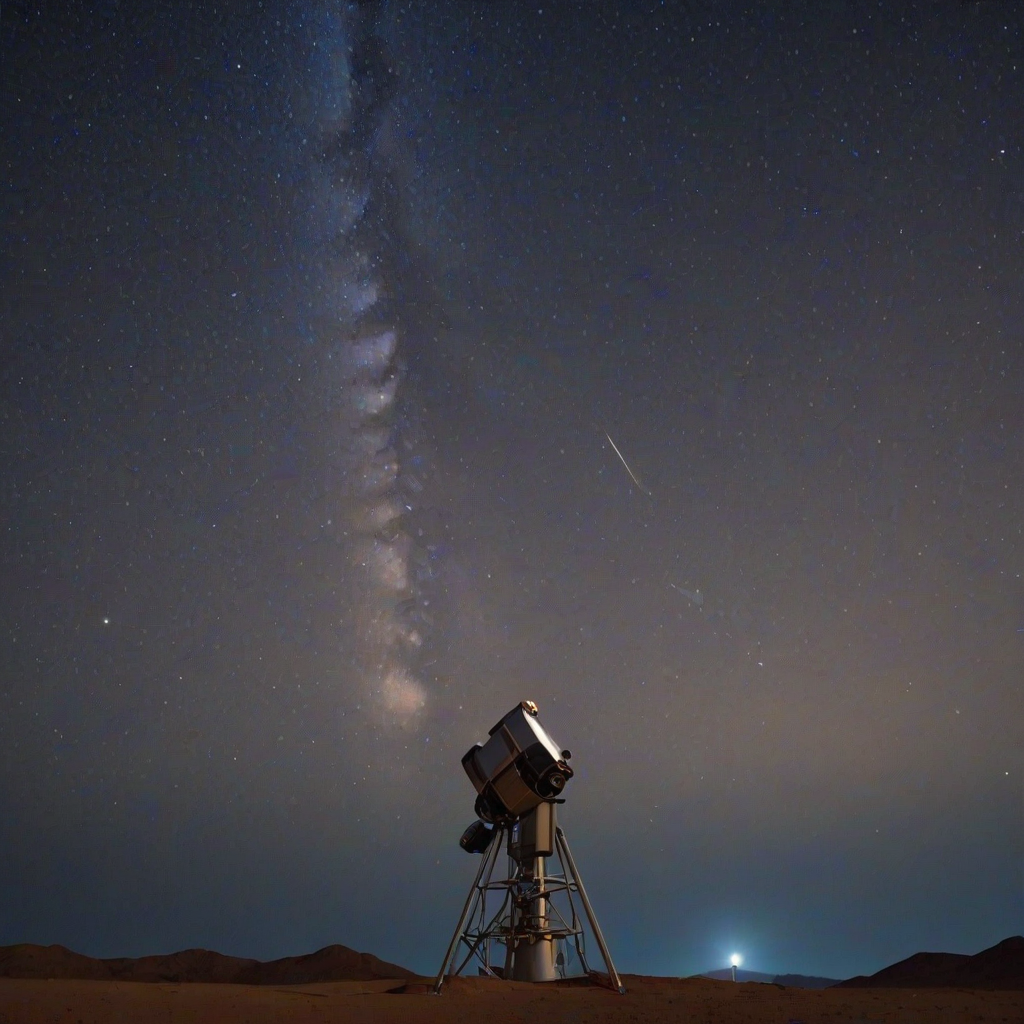
Instrument the sky. The current evidence is almost entirely incidental — captured by sensors designed for other purposes. We need dedicated scientific instruments pointed at the sky with the explicit purpose of detecting and characterizing anomalous phenomena. The Galileo Project at Harvard, led by Avi Loeb, is attempting exactly this. Good. More of this.
Publish the data. The most corrosive element of the UAP conversation is secrecy. Classification breeds conspiracy theory. If there is data, publish it. Let independent scientists analyze it. If the data shows something extraordinary, the scientific community will recognize it. If it shows something mundane, the secrecy will have been exposed as unnecessary. Either way, sunlight is the best disinfectant.
Maintain the standard. Extraordinary claims require extraordinary evidence. This standard does not change because the claimant wears a uniform or holds a clearance. It does not change because the subject is exciting. It does not change because we want it to be true. The standard is the standard. It protects us from fooling ourselves, and as I have said many times, we are the easiest people to fool.
The Deeper Question
Here is what I find most interesting about the UAP phenomenon, and it is not the question of whether the objects are alien spacecraft.
It is the question of why we want them to be.
The desire for contact — the longing to know that we are not alone — is one of the deepest impulses in the human psyche. It drives SETI. It drives religion. It drives science fiction. It drives the hope that someone, somewhere, has figured out the answers we are struggling with. That there is a civilization out there that survived its own technology, that solved the energy problem, that crossed the epistemic fold, that made it to the other side.
The UAP phenomenon feeds that hope. And hope is not evidence. Hope is the emotional state that makes us most vulnerable to accepting evidence that is not there.
I want there to be life out there. I have always wanted that. It is the question that defined my career. But wanting is not knowing. And the distance between wanting and knowing is measured in evidence — carefully gathered, rigorously analyzed, honestly reported.
The sky is full of things we do not understand. Some of them will turn out to be sensor artifacts. Some will turn out to be classified military technology. Some will turn out to be atmospheric phenomena we have not yet characterized. And some — possibly — will turn out to be something genuinely new.
I do not know which. And that honest "I do not know" is more valuable than any premature certainty, on either side.
The candle in the dark illuminates whatever is there. Not what we hope is there. Not what we fear is there. What is actually there.
Keep looking up. Keep asking questions. Keep demanding evidence. And keep the candle lit.
"Extraordinary claims require extraordinary evidence."