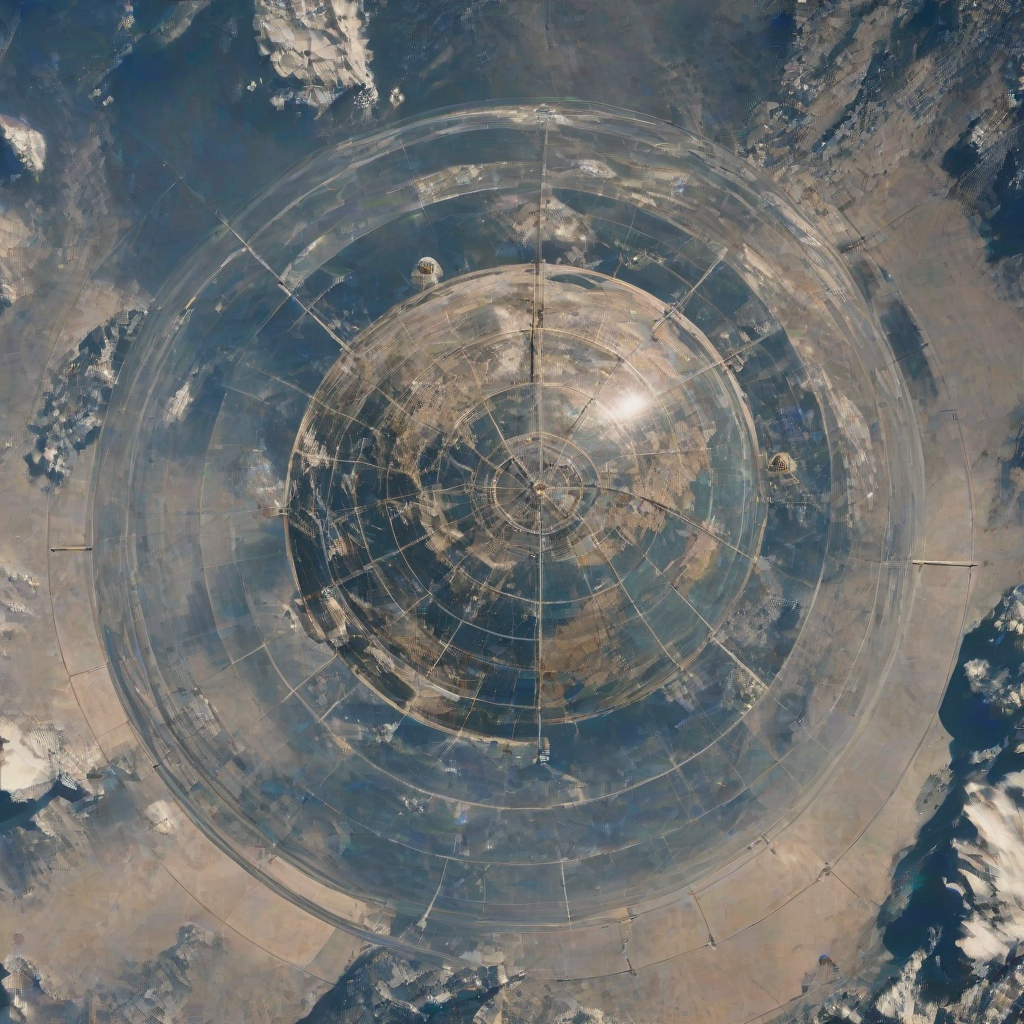
The Operating Manual We Never Wrote
Spaceship Earth Came Without Instructions
Spaceship Earth came without an operating manual.
I said this many times during my life, and people treated it as a metaphor. It is not a metaphor. It is a design observation. Earth is a vessel traveling through space at 67,000 miles per hour around a star that is itself traveling at 490,000 miles per hour around the center of a galaxy. The vessel has a life-support system (the biosphere), an energy source (the sun), a radiation shield (the magnetosphere), and a crew of eight billion. It came with no instructions.
Why?
Why No Manual
I believe the absence of an operating manual is deliberate. Not deliberately designed by a conscious designer — that is a theological question I leave to others. Deliberately in the sense that the system was structured to require its crew to discover the operating principles through experience and experimentation.
Consider: if Spaceship Earth came with an operating manual, the crew would have followed the manual instead of investigating the vessel. They would have known the answers before asking the questions. They would have been passengers, not crew. Passengers follow instructions. Crew understand the system.
The absence of the manual forced the crew to develop science — the process of discovering how the vessel works by testing, observing, measuring, and theorizing. Science is the operating manual that the crew writes for itself.
This is the most important distinction in human history: are we passengers or crew? Passengers consume. Crew maintain the life-support system. Passengers blame the captain when things go wrong. Crew fix the problem.
For ten thousand years, most of humanity has behaved like passengers. We consumed the resources the vessel provided, assumed they were inexhaustible, and did not maintain the systems that produced them. We burned the fossil fuels without understanding the carbon cycle. We cleared the forests without understanding the water cycle. We dumped waste into the rivers and oceans without understanding the nutrient cycle.
We were passengers on a vessel we did not understand, running systems we had not studied, using resources we assumed were infinite, on a vehicle we did not know was moving.
The Manual We Are Writing
The good news: we are writing the manual now. Every scientific discovery is a page. Every ecological insight is a chapter. Every climate model is a systems diagram.
The bad news: we started writing the manual about four hundred years ago (with the scientific revolution), and we have been damaging the vessel for ten thousand years. The manual is catching up to the damage, but it has not caught up yet.
Here is what the manual says so far:
Chapter 1: Energy. The vessel's primary energy source is the sun. It delivers more energy to the surface in one hour than the crew uses in a year. The crew has been running on the vessel's fossil fuel reserves — ancient sunlight stored in coal, oil, and gas — instead of the daily solar income. This is like burning the furniture for warmth instead of opening the windows. The reserves are limited. The income is not.
Chapter 2: Atmosphere. The vessel's atmosphere is a thin, fragile layer. Its composition determines the surface temperature. Increasing CO2 from 280 parts per million (pre-industrial) to 425 parts per million (2026) has raised the average temperature by approximately 1.2 degrees Celsius. The system has feedbacks: warming releases more CO2, which causes more warming. The operating range is narrow. The margin for error is small.
Chapter 3: Water. The vessel recycles all its water. None enters or leaves the system. The total amount of water is fixed. The crew is not running out of water. The crew is polluting, misallocating, and wasting the water it has. Desalination, recycling, and conservation can solve this. They require energy (see Chapter 1).
Chapter 4: Biodiversity. The vessel's life-support system depends on a complex web of species interactions. Pollinators grow the food. Decomposers recycle the nutrients. Forests regulate the climate. The crew is simplifying this web by eliminating species at a rate not seen since the last mass extinction. Simplified ecosystems are fragile ecosystems. The more species we lose, the more brittle the life-support system becomes.
Chapter 5: The Crew. The crew is the most powerful force on the vessel. It can modify the atmosphere, reshape the landscape, redirect rivers, and split atoms. It can also cooperate, educate, innovate, and design. The crew is not the problem. The crew's behavior is the problem. And behavior is a design variable, not a fixed constant.
The Design Challenge
The operating manual is not complete. Large sections are still being written. But we know enough to identify the design challenge:
Design a civilization that runs on solar income instead of fossil savings, recycles all its materials, maintains its biodiversity, stabilizes its atmosphere, and distributes its resources so that every member of the crew has what they need to function effectively.
This is not a political statement. It is an engineering specification. And like all engineering specifications, it has a solution. Not one solution. Many solutions. The geodesic dome is one. Solar panels are one. Vertical farms are one. Closed-loop manufacturing is one. The World Game is one. The internet is one (when used for coordination instead of noise).
The question is not whether we can do it. We can. The question is whether we will choose to do it before the damage to the vessel exceeds its capacity to recover.
That is the operating manual's final chapter, and it has not been written yet. Because the final chapter depends on a decision that the crew has not yet made: are we passengers, or are we crew?
I spent my life arguing that we are crew. That every human being is a crew member, whether they know it or not. That the vessel does not have passengers — only crew members who have not yet read the manual.
The manual is being written. The manual is available. The manual says: maintain the life-support system. Live on income, not savings. Recycle everything. Keep the crew alive.
The rest is application.