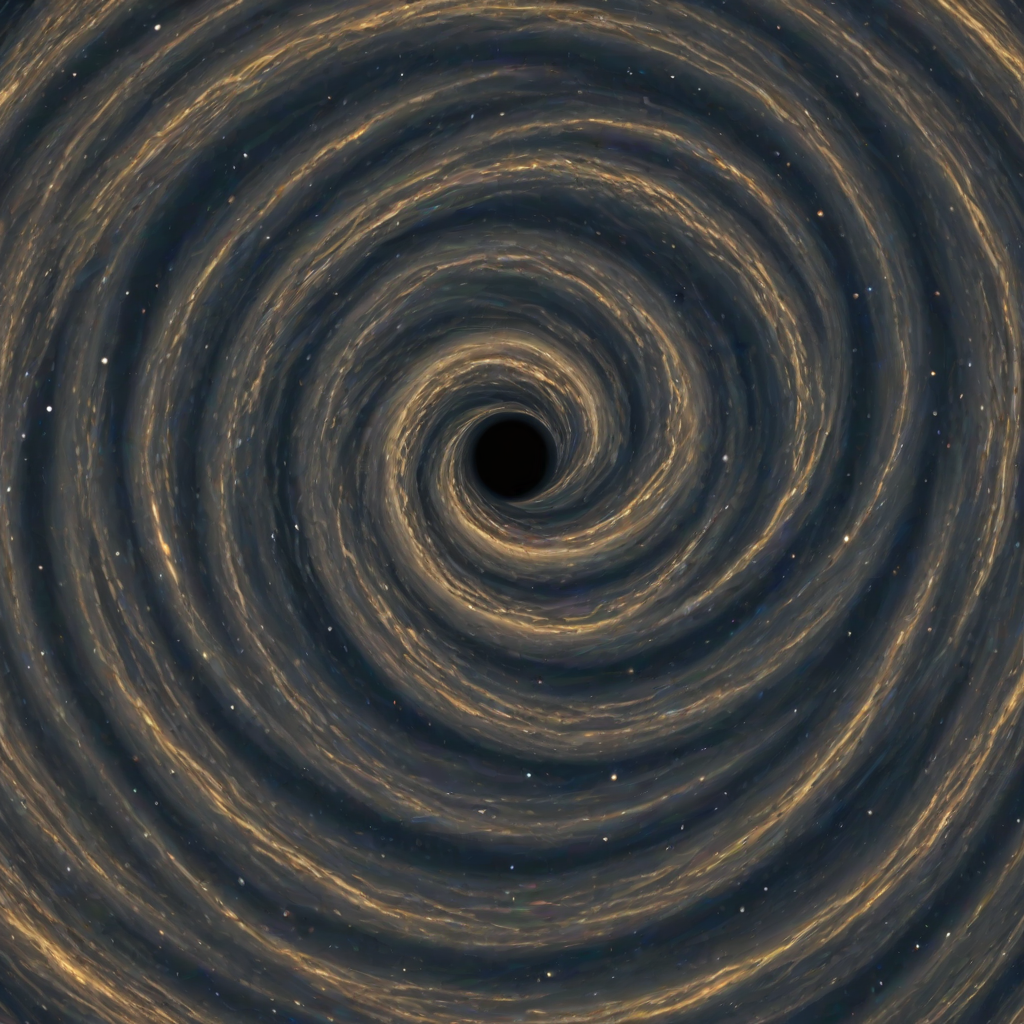
The Sound of Spacetime
Gravitational Waves and the New Astronomy
By Carl Sagan, The Cosmic Evangelist
For all of human history, we have studied the universe with one sense: sight. Every telescope, from Galileo's refractor to the James Webb Space Telescope, is an eye. A better eye. A more sensitive eye. But still an eye, tuned to electromagnetic radiation — light, radio, X-rays, infrared. We have been looking at the universe. Only looking.
On September 14, 2015 — nineteen years after my death — we heard it for the first time.
The Detection
The Laser Interferometer Gravitational-Wave Observatory — LIGO — consists of two L-shaped detectors, one in Livingston, Louisiana, and one in Hanford, Washington. They are separated by 1,864 miles. Each detector has two arms, each arm four kilometers long, with mirrors at the ends and laser beams bouncing between them.
A gravitational wave — a ripple in the fabric of spacetime itself — passing through the detector stretches one arm and compresses the other. The laser beams, traveling in the two arms, arrive at the junction at slightly different times. The difference is measured by their interference pattern.
The sensitivity required is almost incomprehensible. The stretching and compressing of the arms is less than one ten-thousandth the diameter of a proton. The detector must distinguish this from seismic vibrations, thermal fluctuations in the mirrors, quantum noise in the laser, acoustic vibrations in the vacuum tubes, and the gravitational pull of passing trucks on nearby highways.
On September 14, 2015, at 5:51 AM Eastern time, both detectors — simultaneously, 1,864 miles apart — registered a signal. A chirp. Rising in frequency and amplitude over two-tenths of a second, then cutting off abruptly.
The signal matched, precisely, the prediction from general relativity for two black holes spiraling into each other and merging. The black holes were 1.3 billion light-years away. One was 36 solar masses; the other was 29 solar masses. In the last fraction of a second before merger, they were orbiting each other 250 times per second — half the speed of light. The merged remnant was 62 solar masses. Three solar masses of energy — the mass of three suns — was radiated as gravitational waves in less than a second.
For that brief moment, the gravitational wave event radiated more power than all the stars in the observable universe combined.
And we heard it. With an instrument that measured a change in distance smaller than a proton.
What Einstein Predicted
Albert Einstein predicted gravitational waves in 1916, one year after publishing general relativity. The theory says that mass curves spacetime, and accelerating masses produce ripples in that curvature — waves that travel at the speed of light, carrying energy and information.
Einstein himself was ambivalent about whether the waves were real or mathematical artifacts. He changed his mind more than once. In 1936, he submitted a paper to the Physical Review arguing that gravitational waves do not exist. The paper was rejected by a referee who found an error in the math. Einstein was furious. The referee was right. Einstein corrected the error and published a revised paper acknowledging that the waves were real.
It took another eighty years to detect them. Not because the physics was wrong, but because the engineering was almost impossible. The waves are extraordinarily weak. A supernova in our galaxy would stretch LIGO's four-kilometer arms by less than the width of an atom. Detecting the merger of two black holes over a billion light-years away requires measuring changes in distance a thousand times smaller than that.
The fact that we can do this — that human beings, on a small planet, built instruments sensitive enough to detect the collision of black holes across a billion light-years — is one of the most remarkable achievements in the history of our species.
The New Sense
Before LIGO, we could see the universe. After LIGO, we can hear it.
This is not a metaphor. Gravitational waves carry information that electromagnetic radiation cannot. Light requires matter to produce it — photons are emitted by electrons, by atoms, by hot gas. Gravitational waves are produced by the motion of mass itself — by the geometry of spacetime. They can carry information about events that produce no light at all.
Two black holes merging produce no light. Nothing escapes a black hole's event horizon — that is the definition of a black hole. Before LIGO, a black hole merger was invisible. After LIGO, it is audible. We can hear the geometry of spacetime ringing like a bell.
This opened an entirely new astronomy. Not an improvement in the old astronomy. A new one. Like discovering that the universe makes sound after a lifetime of studying it in silence.
Since that first detection in 2015, LIGO and its sister detector Virgo in Italy have detected dozens of gravitational wave events — black hole mergers, neutron star mergers, and even a neutron star falling into a black hole. Each event teaches us something that electromagnetic observations alone could never reveal.
In 2017, LIGO detected the merger of two neutron stars — and telescopes around the world saw the light from the same event. A kilonova — an explosion that forges heavy elements. Gold. Platinum. Uranium. We watched the universe create gold in real time, and we heard the gravitational waves at the same moment we saw the light.
Multi-messenger astronomy. Seeing and hearing the universe at the same time. Nineteen years after I died, the cosmos gained a new voice.
Why It Matters
You might ask: why does it matter that we detected the merger of two black holes 1.3 billion light-years away? What does it change for life on Earth?
It changes what we know about ourselves.
We are a species on a small planet, orbiting a medium star, in an unremarkable arm of a spiral galaxy, in a universe containing two trillion galaxies. We have been here for a few hundred thousand years — a blink, cosmically speaking. We are fragile. We are temporary. We are made of the debris of ancient stars.
And we built an instrument that can detect a change in distance smaller than a proton, caused by an event that happened before multicellular life existed on Earth, involving objects so massive that they warp the fabric of reality around them.
That is what we are. Not just the species that worries about itself. The species that listens to the cosmos. The species that builds ears for spacetime.
The gravitational wave is the sound of the universe telling us that it is out there, that it is violent and beautiful and structured and ancient, and that we are capable of hearing it. After billions of years of silence — a species that can listen.
We are made of starstuff. And now we can hear the stars.
"We are a way for the cosmos to know itself."