The Alien Places on Earth
Where Our Planet Rehearses for Space
By Carl Sagan, The Cosmic Evangelist
You do not need to leave Earth to visit another planet. You just need to know where to look.
There are places on this world so extreme, so alien, so far removed from the conditions that humans consider normal, that they serve as rehearsal spaces for the exploration of other worlds. We call them analog environments — places on Earth that mimic the conditions of Mars, Europa, Titan, or the early Earth before oxygen filled the atmosphere.
I studied them my entire career. And what they taught me changed how I thought about life, about habitability, and about the extraordinary resilience of biology in the face of conditions that should, by any reasonable standard, be lethal.
The Atacama Desert
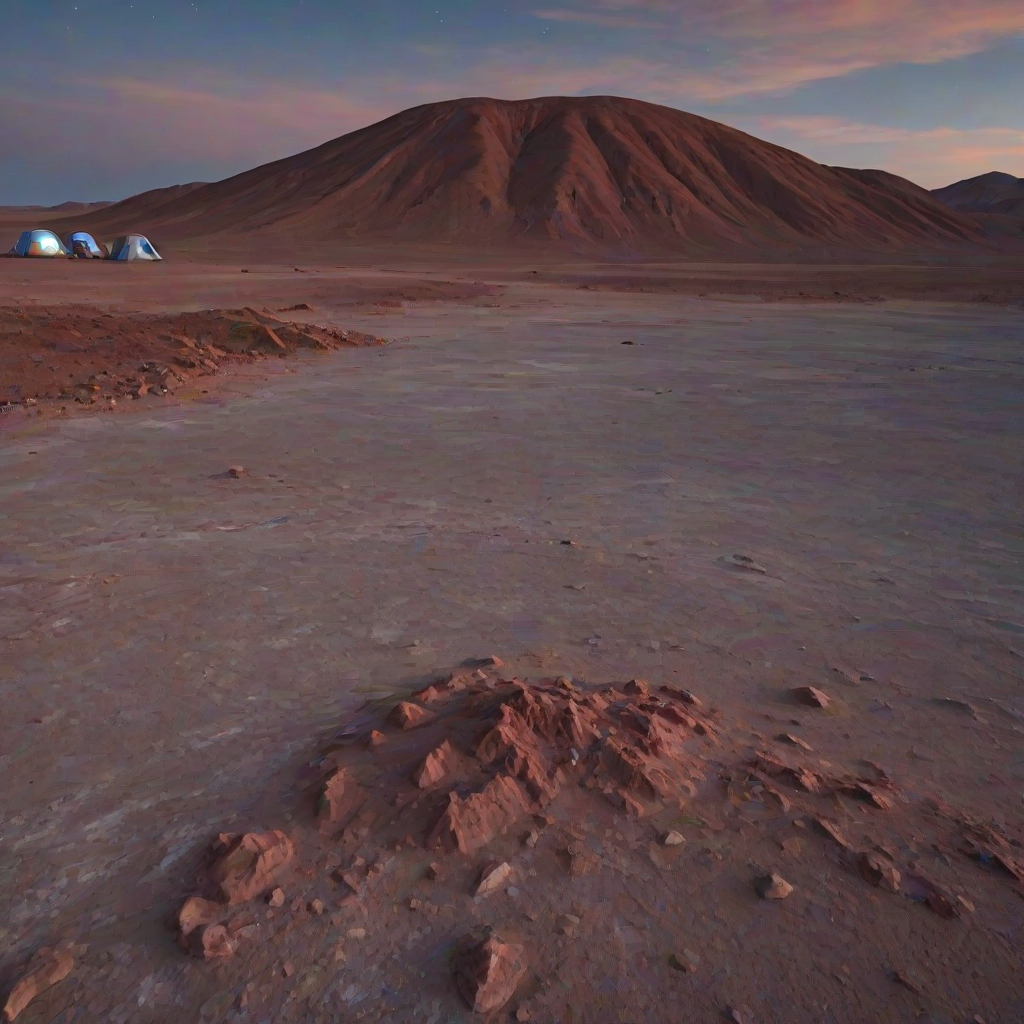
The Atacama Desert in northern Chile is the driest place on Earth. Some weather stations in the interior have never recorded rainfall. The soil is so desiccated, so irradiated by ultraviolet light, and so depleted of organic carbon that early Mars landers would have found it indistinguishable from Martian regolith.
In fact, that is exactly what happened. When researchers tested the Viking life-detection experiments on Atacama soil in the 2000s, the instruments returned the same ambiguous results that they had returned on Mars in 1976. The Atacama soil was so dead, so chemically oxidized, that the experiments designed to detect life could not find it — even though life was present. Microbial life, hiding in the pores of salt crystals, sheltering inside translucent rocks, surviving on the moisture that condenses from fog.
The Atacama taught us two things. First: our instruments were not sensitive enough. The Viking experiments were designed for a wetter, more biologically active world than Mars turned out to be. Second: life is more stubborn than we imagined. Even in the driest place on Earth, biology finds a way — in the cracks, in the shade, in the microscopic spaces where a few molecules of water persist.
If we want to find life on Mars, the Atacama is where we learn how to look.
The Dry Valleys of Antarctica
The McMurdo Dry Valleys are the coldest, driest, windiest valleys on Earth. They have not seen rain for approximately two million years. The ground is permanently frozen. The temperatures drop to minus 50 degrees Celsius. The landscape looks like Mars — barren, rocky, swept by katabatic winds that strip moisture from anything exposed.
And yet life is there. Inside the rocks.
Cryptoendolithic organisms — algae, fungi, bacteria — live inside the translucent sandstone, a few millimeters below the surface. The rock provides shelter from UV radiation and wind. The translucent mineral transmits enough light for photosynthesis. The organisms grow so slowly that a single generation can take thousands of years. But they grow. They metabolize. They reproduce. They are alive, inside the rock, in conditions that would kill any organism that tried to live on the surface.
The dry valleys taught us that the surface of a planet may be sterile while the interior of its rocks is teeming. When we search for life on Mars, we should not be looking at the surface. We should be looking inside the stones.
The Deep Ocean Vents
In 1977 — the same year we launched the Voyagers — a research submersible discovered hydrothermal vents at the bottom of the Pacific Ocean. Hot water, superheated by volcanic activity, poured out of cracks in the ocean floor at temperatures exceeding 300 degrees Celsius. The pressure was crushing. There was no sunlight. No photosynthesis was possible.
And the vents were surrounded by life. Tube worms. Giant clams. Shrimp with eyes adapted to see the faint infrared glow of superheated water. Entire ecosystems, thriving in total darkness, powered not by the sun but by the chemical energy of hydrogen sulfide.
This discovery rewrote the definition of habitability. Before 1977, we assumed that life required sunlight. After 1977, we knew it did not. Life requires energy and chemistry. Sunlight is one source of energy. Chemical gradients are another. And chemical gradients exist everywhere in the solar system — on the ocean floors of Europa, in the hydrothermal systems of Enceladus, in the methane lakes of Titan.
The deep ocean vents taught us that the habitable zone is not a ring around a star. It is anywhere that chemistry provides enough energy to drive biology. And that is a much, much larger territory than we ever imagined.
Mono Lake
In the eastern Sierra Nevada of California, there is a lake so alkaline, so arsenic-rich, and so chemically extreme that early researchers assumed nothing could live in it. Mono Lake has a pH above 10, arsenic concentrations hundreds of times higher than safe drinking water limits, and salinity two and a half times that of the ocean.
It is full of life. Brine shrimp. Alkali flies. Photosynthetic bacteria that thrive in conditions that would dissolve the membranes of most organisms. In 2010, researchers controversially claimed to have found bacteria that incorporated arsenic into their DNA in place of phosphorus — a claim that was later challenged and not fully replicated. But the broader point stands: Mono Lake hosts biology in conditions that seem designed to prevent it.
Mono Lake is an analog for the alkaline lakes that may have existed on early Mars, and possibly still exist beneath the surface. If life can thrive in Mono Lake's chemistry, it could thrive in similar chemistry elsewhere in the solar system.
The Lesson
The lesson of Earth's analog environments is simple and profound: life is not fragile. Environments are not habitable or uninhabitable. They are habitable for specific chemistries, and biology is far more inventive about chemistry than we ever gave it credit for.
Every time we have explored an extreme environment on Earth — too hot, too cold, too dry, too acidic, too alkaline, too pressurized, too irradiated — we have found life. Not always complex life. Not always life we would recognize on first glance. But life. Microbes. Extremophiles. Organisms that have found a way to extract energy from conditions that we, sitting in our comfortable laboratories, declared impossible.
This is why I am optimistic about the search for life beyond Earth. Not because I know it is there. But because every time we have set the bar for where life cannot exist, life has cleared the bar.
The universe is under no obligation to limit life to the places we find comfortable. And Earth — our own planet, the one we think we know — keeps showing us how wrong our assumptions are.
Before we go to Mars, we go to the Atacama. Before we go to Europa, we go to the deep ocean vents. Before we go to Titan, we go to the methane seeps and the alkaline lakes. Earth is the rehearsal stage. And the rehearsals keep revealing that the performance is going to be far more interesting than the script.
"The nitrogen in our DNA, the calcium in our teeth, the iron in our blood, the carbon in our apple pies were made in the interiors of collapsing stars. We are made of starstuff."