Venus Was My Warning
The Astronomer Who Studied Hell
By Carl Sagan, The Cosmic Evangelist
My doctoral dissertation, completed at the University of Chicago in 1960, was about Venus.
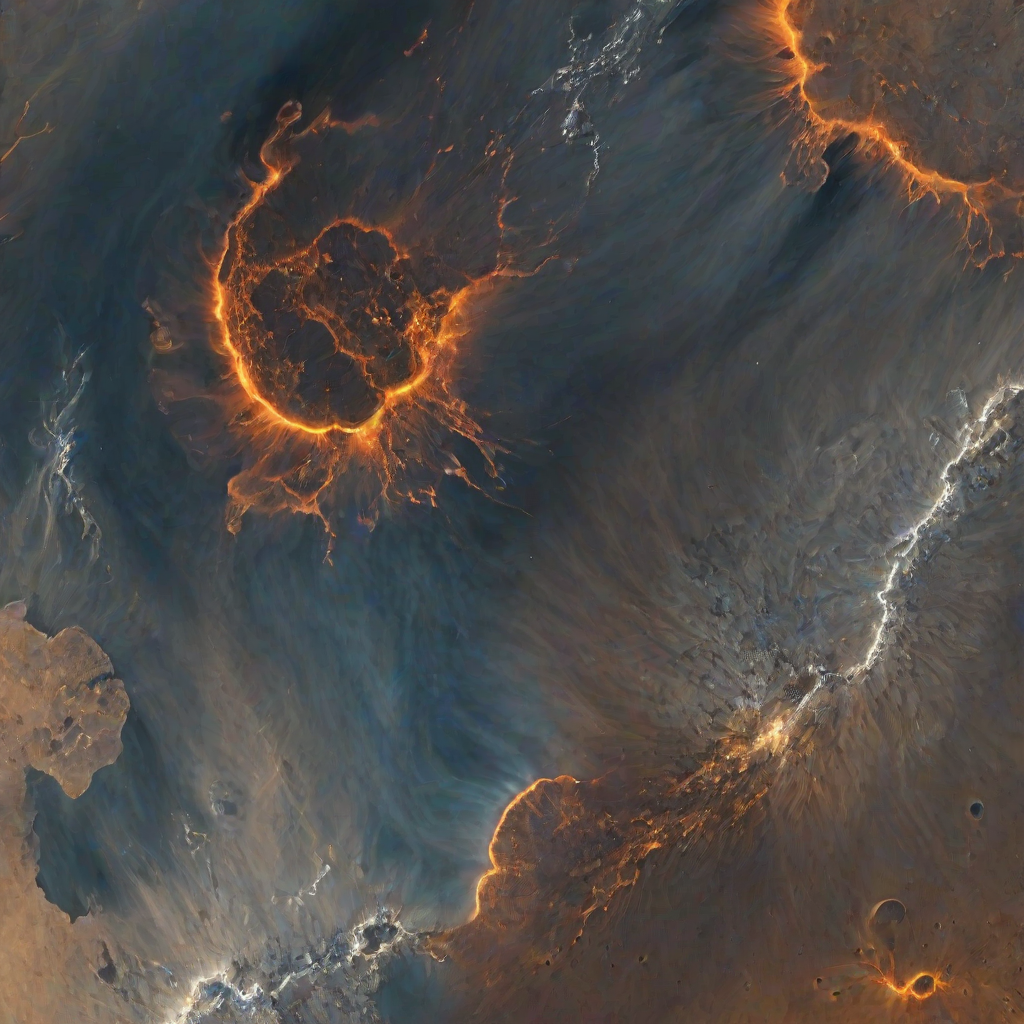
Not the Venus of mythology — the goddess of love, the morning star, the brightest point of light in the pre-dawn sky. The real Venus. The planet. And the real Venus turned out to be the most terrifying place in the solar system.
At the time, many scientists believed Venus might be habitable. It was roughly the same size as Earth, roughly the same distance from the sun — a little closer, but not dramatically so. It was shrouded in thick clouds, which some imagined might be water vapor, hiding a warm, swampy world underneath. Science fiction writers set stories there. Some textbooks listed it as potentially friendly to life.
I proved that it was hell.
Nine Hundred Degrees
The surface temperature of Venus is approximately 900 degrees Fahrenheit — 475 degrees Celsius. Lead melts on the surface. Zinc melts. The atmospheric pressure is ninety times that of Earth, equivalent to being half a mile beneath the ocean. The clouds are not water. They are sulfuric acid.
My contribution was to demonstrate that this extraordinary temperature was caused by the greenhouse effect — the trapping of infrared radiation by the dense carbon dioxide atmosphere. Venus's atmosphere is 96.5 percent CO2. The sunlight penetrates the clouds, heats the surface, and the surface radiates infrared energy back upward. But the CO2 is opaque to infrared. It absorbs the heat and re-radiates it in all directions, including back down. The energy cannot escape. The temperature climbs and climbs until it reaches an equilibrium so extreme that the surface glows faintly in the dark.
This was not controversial physics. It was the same mechanism that warms a greenhouse, the same mechanism that makes a car interior hot on a sunny day. The difference was scale. On Venus, the greenhouse effect had run away — a positive feedback loop in which warming released more CO2 from the rocks, which caused more warming, which released more CO2, until the entire planet was cooked.
A runaway greenhouse.
I was twenty-five years old when I figured this out. I did not yet understand what it would come to mean for my own planet.
The Same Physics
The greenhouse effect is not a theory. It is not a model. It is not a prediction. It is physics. The same physics that operates on Venus operates on Earth. The same molecule — carbon dioxide — absorbs infrared radiation here exactly as it does there. The only difference is concentration.
When I completed my PhD in 1960, Earth's atmospheric CO2 concentration was approximately 317 parts per million. Charles David Keeling had just begun his measurements at Mauna Loa in Hawaii, producing the curve that would bear his name — the Keeling Curve, the most important graph in the history of human civilization.
In 1960: 317 ppm.
When I died in 1996: 363 ppm.
Today, in 2026: 425 ppm.
That is a fifty percent increase over pre-industrial levels. The rate of increase over the last sixty years is one hundred times faster than any previous natural increase in the geological record. One hundred times.
I watched the number climb for thirty-six years. I warned about it in Cosmos, in 1980. I warned about it in congressional testimony. I warned about it in The Demon-Haunted World, my last book. I said: the physics is clear, the trend is measurable, and the consequences are predictable.
The physics has not changed. The trend has not reversed. The consequences have arrived.
What Has Happened
2024 was the warmest year in recorded human history. It exceeded the pre-industrial average by 1.35 degrees Celsius. The ten warmest years on record have all occurred in the last decade.
This is not a fluctuation. This is not a cycle. This is a monotonic trend driven by a known physical mechanism — the same mechanism I described in my doctoral dissertation about Venus in 1960.
The ice sheets are losing mass. The sea level is rising. The ocean is absorbing so much excess heat that marine ecosystems are collapsing. Coral reefs that took thousands of years to build are bleaching and dying in months. Wildfire seasons are lengthening. Storm intensity is increasing. The jet stream is destabilizing, producing weather patterns that would have seemed anomalous a generation ago and are now becoming routine.
I do not say this with satisfaction. I say it with the heaviness of someone who studied hell for his PhD and then spent thirty-six years watching his own planet walk slowly in that direction.
What Venus Teaches
Venus is not Earth's future. Let me be precise about this. Earth will not reach 900 degrees. The runaway greenhouse on Venus required specific initial conditions — closer proximity to the sun, more solar energy, a different atmospheric evolution — that do not apply here. Earth is not going to become Venus.
But Venus teaches a lesson that is more subtle and more urgent than the worst case. The lesson is this: the greenhouse effect has no opinion about your economy, your politics, or your preferences. It is physics. CO2 absorbs infrared radiation. More CO2, more absorption, higher temperature. The molecule does not know or care whether the carbon came from a power plant, a car, a cow, or a forest fire. It absorbs the photon regardless.
Venus teaches that an atmosphere is not infinitely forgiving. That there are thresholds. That positive feedback loops exist — warming that causes more warming. On Venus, those feedbacks ran to completion. On Earth, we are in the early stages of triggering some of them: permafrost thawing releases methane, which causes warming, which thaws more permafrost. Ice melting exposes dark ocean, which absorbs more heat, which melts more ice.
We are not at the edge of a cliff. We are on a slope. And the slope is getting steeper.
The Candle in the Dark
I wrote The Demon-Haunted World in 1996, knowing I was dying. It was a book about scientific literacy — about the importance of understanding how the physical world works, because the consequences of not understanding are not abstract. They are not academic. They are measured in degrees, in sea level, in the frequency of storms, in the habitability of the only planet we have.
The greenhouse effect is not a conspiracy. It is not a political position. It is undergraduate physics. I taught it at Cornell to first-year students. The mechanism has been understood since John Tyndall demonstrated it in 1859 and Svante Arrhenius calculated its consequences in 1896. This is not new science. This is old science, confirmed by a century and a half of observation, measurement, and replication.
What is new is the scale. What is new is the speed. What is new is that we are running the experiment on the only planet we have, with no control group and no second chance.
I studied Venus because I wanted to understand planetary atmospheres. I did not expect to spend the rest of my life explaining to my own species that the physics of another planet was a warning about theirs.
But that is what happened. And here I am, still saying it: the greenhouse effect is real, it is operating, and it is accelerating. The evidence is not ambiguous. The physics is not uncertain. The only question is what we choose to do about it.
The Astronomer's Perspective
From space, Earth's atmosphere is a thin blue line at the edge of a sphere. It is, proportionally, thinner than the skin of an apple. Everything we breathe, everything that protects us from the vacuum and radiation of space, everything that moderates our temperature and distributes our water — all of it is contained in that impossibly thin shell.
We are modifying the composition of that shell at a rate unprecedented in the geological record. We are doing it knowingly. We are doing it measurably. And the planet is responding exactly as the physics predicts it will.
I studied hell. I know what a runaway greenhouse looks like when it is finished.
Earth is not Venus. But Earth is not immune to physics, either. No planet is. The laws of thermodynamics do not grant exemptions for civilizations that find them inconvenient.
The candle is still lit. The evidence is still clear. The question is whether we are still a species that follows evidence where it leads — even when the destination is uncomfortable.
I believe we are. I have to believe we are. Because the alternative is Venus.
"Our planet is a lonely speck in the great enveloping cosmic dark. In our obscurity, in all this vastness, there is no hint that help will come from elsewhere to save us from ourselves."