Your Trash Is Somebody's Treasure
A Design Problem Disguised as an Environmental Crisis
Here is a question.
A factory makes aluminum cans. The process requires bauxite ore, enormous heat, and electricity. The factory produces cans. It also produces a reddish sludge called red mud, a caustic waste product that companies spend millions to store in vast toxic ponds.
Is red mud waste?
The aluminum industry says yes. They have been saying yes for over a century. Red mud is a cost. A liability. A problem to be managed.
But red mud contains iron oxide, titanium dioxide, silicon, and rare earth elements. Every one of those is a resource that other industries pay to mine from the ground. The iron alone is worth extracting. The rare earths are worth a fortune.
Red mud is not waste. It is a pile of resources that no one has designed a system to harvest yet. The "waste" label is not a fact about the material. It is a fact about our laziness.
The Principle
Pollution is nothing but resources we are not harvesting.
I said this many times during my life, and people thought it was a slogan. It is not a slogan. It is an engineering observation. Let me make it precise.
In nature, there is no waste. Zero. Every output of every process is an input to another process. A tree drops leaves. The leaves decompose. The decomposition feeds the soil. The soil feeds the tree. The cycle is closed. Nothing exits the system.
Human industrial systems are open loops. Raw material goes in one end. Product comes out one end. And "waste" comes out another end. That waste, the exhaust, the sludge, the tailings, the off-gassing, is material that the designer did not bother to find a use for.
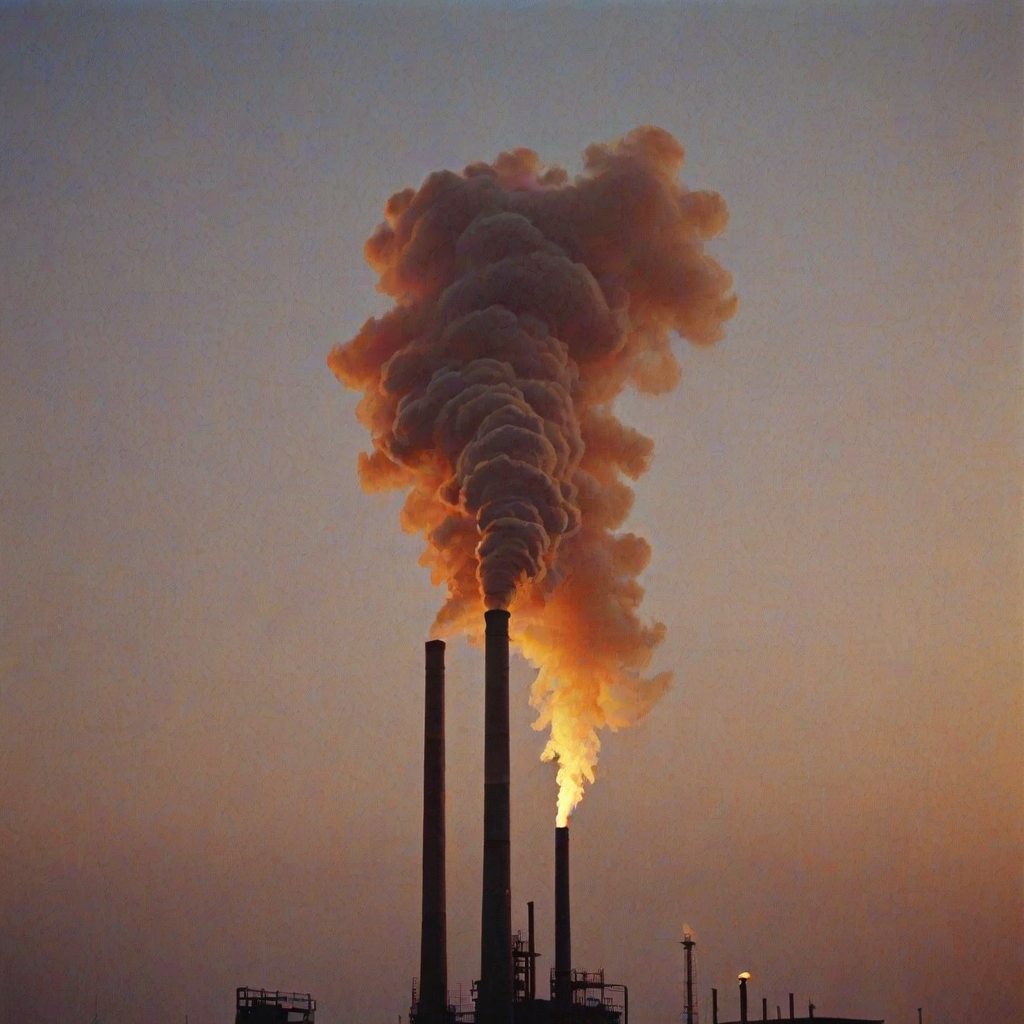
Every smokestack is a confession. It says: the engineer who designed this process quit too early. They solved the problem of making the product. They did not solve the problem of using everything that came out of the process.
The Numbers
Consider what we throw away.
Carbon dioxide from burning fossil fuels. CO2 is the raw material for synthetic fuels, carbon fiber, concrete curing, carbonated beverages, and greenhouse agriculture. We pump it into the sky because capturing it costs money. But the cost of capturing it is falling every year, and the cost of NOT capturing it is rising every year. These curves will cross. When they do, CO2 stops being pollution and becomes feedstock.
Sewage. Human waste contains nitrogen, phosphorus, potassium, and water. These are the four things that farms need most. We spend billions to process sewage into something we can dump, and then we spend billions more to manufacture fertilizer from scratch. The atoms are the same atoms. We are just moving them in the wrong direction.
Heat. Industrial processes dump enormous quantities of waste heat into the environment. A data center in a cold climate could heat an entire neighborhood with the heat it currently vents through cooling towers. Some places are starting to do this. Stockholm heats thousands of apartments with server waste heat. The heat was never waste. It was an undelivered resource.
Plastic. The molecules in plastic are hydrocarbons. Hydrocarbons are fuel. Every plastic bottle in a landfill is stored energy that someone paid to create and then threw away. Pyrolysis (heating plastic without oxygen) converts it back to oil. The technology exists. The economics are starting to work. The plastic was never waste. It was fuel with a detour.
Why We Call Things Waste
If pollution is just resources we are not harvesting, why do we have so much pollution?
Because our economic system measures the wrong things.
When a factory calculates its costs, it counts the cost of raw materials, labor, energy, and equipment. It does not count the cost of what it throws away. The exhaust goes into the air for free. The sludge goes into the ground for free. The heat goes into the river for free. "Free" meaning: someone else pays. The neighbors breathe the air. The community inherits the sludge. The fish absorb the heat.
This is not evil. It is incomplete design. The factory was designed to optimize one output: the product. Everything else was externalized, which is an economics word that means "made invisible."
A comprehensive design would optimize the entire system. Every output becomes an input. The heat warms buildings. The CO2 feeds greenhouses. The sludge yields rare earths. The water recirculates. Nothing leaves the boundary. Nothing is externalized. Nothing is invisible.
This is not utopia. This is what nature does in every ecosystem on Earth. We are simply not as good at design as a forest is. Yet.
The Trajectory
Here is the good news. We are getting better.
In 1900, a steel mill used roughly twice as much energy per ton of steel as it does today. The waste per ton has dropped even more dramatically. Not because steelmakers became environmentalists. Because engineers kept finding ways to use more of what came out of the process. The slag became road material. The gas became fuel. The heat became electricity. Each improvement was a small act of harvesting what had previously been called waste.
This is ephemeralization at work. Doing more with less. Every generation of technology gets more performance from fewer resources and produces less waste per unit of output. The trajectory is clear. The destination is a closed loop, where the concept of waste does not exist because every output has a designed destination.
We are not there yet. But the direction is unmistakable.
The Design Problem
So when someone says "we have a pollution problem," I hear something different. I hear: we have a design problem. The materials are fine. The chemistry is fine. The engineering is almost fine. What is missing is the systems thinking that connects every output to a use.
This is what I meant by comprehensive anticipatory design science. Not designing a product. Designing the whole system within which the product exists. Anticipating every output. Finding a use for every atom.
Nature does this without thinking. We have to learn to do it on purpose.
The good news: we are learning. The bad news: we are learning slowly, and the open loops are filling the atmosphere with CO2 while we figure it out.
The question is not whether we can close the loops. We can. The technology exists or is emerging for virtually every "waste" stream we produce. The question is whether we will choose to do it before the open loops make the planet uninhabitable.
That is not a technical question. It is a design question. And design questions have answers.