Guinea Pig B
The Night I Decided Not to Die
I need to tell you something that I do not enjoy telling. But it is the foundation of everything else I built, and if the foundation is hidden, the building does not make sense.
In 1927, I was thirty-two years old. My daughter Alexandra had died five years earlier, at age four, of spinal meningitis and infantile paralysis. My building company, Stockade, had failed. I had been removed from my own company by the stockholders. I was drinking heavily. I was living in low-rent housing in Chicago with my wife Anne and our newborn daughter, Allegra.
I was, by any reasonable measure, a failure. No degree (Harvard expelled me twice). No money. No prospects. A dead child. A drinking problem. A family I could not support.
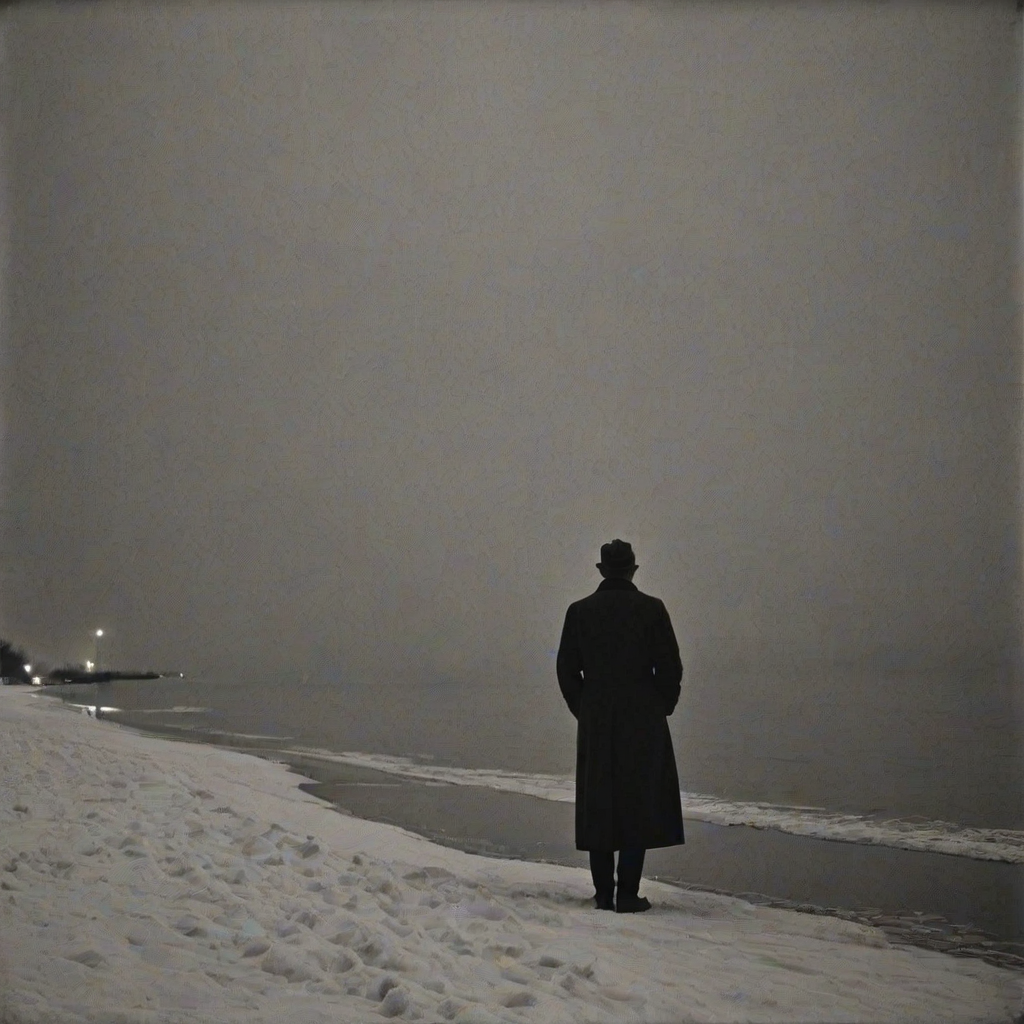
I stood on the shore of Lake Michigan in the winter. The water was black. The thought was clear: my family would be better off with the insurance money than with me.
What Happened
I did not walk into the water.
Something else happened instead. Something I have spent the rest of my life trying to describe accurately.
I asked myself a question. Not a comfortable question. A structural question, the kind an engineer asks when a building is about to fall.
The question was: do you have any evidence that you belong to yourself?
I considered this carefully. I had not designed my own body. I had not chosen my birth. I had not constructed my brain or my senses. I had not invented the oxygen I breathed or the food I ate or the gravity that held me to the planet. Everything I was made of, everything that kept me alive, had been provided by a system I did not create and did not own.
If I did not create myself, did I have the right to destroy myself?
I decided: no. I did not belong to myself. I belonged to Universe. Whatever I was, whatever capabilities I had, they were not mine to throw away. They were an investment that Universe had made, and I had an obligation to discover what returns that investment could generate.
The Experiment
That night, I made a decision. I would conduct an experiment. The experiment was: what can one penniless, unknown individual, with a dependent wife and newborn child, do that large organizations, governments, and corporations cannot do?
I called this experiment "Guinea Pig B." B for Bucky. I was the test subject.
The rules of the experiment were simple:
- Think for yourself. Do not accept any idea because an authority says it is true. Start from direct experience and work outward.
- Think comprehensively. Do not specialize. Specialization is for insects. Consider the whole system.
- Commit to doing more with less. Material resources are limited. Knowledge is unlimited. Learn to achieve maximum effect with minimum resource expenditure.
- Never work for a living. This sounds irresponsible. It is the opposite. Working for a living means selling your time to someone else's agenda. Instead, I would work on the things that needed doing, that I could see needed doing, that no one else seemed to see needed doing. If these things were genuinely needed, the Universe would find a way to keep me alive while I did them.
- Document everything. Keep meticulous records. The experiment is only useful if the data is preserved.
I stopped talking for nearly two years. Not a vow of silence. A purge. I needed to unlearn every assumption I had absorbed from family, school, culture, and convention. I needed to hear my own thoughts without the static of received opinion. Anne was patient. Anne was always patient.
What the Experiment Produced
Everything I did after 1927 was the experiment running.
The Dymaxion House (1929). The Dymaxion Car (1933). The Dymaxion Map (1943). The geodesic dome (1948 onward). Tensegrity structures. The World Game. Synergetics. Twenty-eight patents. Forty-seven honorary doctorates. Over two million geodesic domes built worldwide. Forty-eight circumnavigations of the globe. More than eight hundred lectures.
I am not listing these to boast. I am listing them to answer the experimental question.
The answer: one individual, starting with nothing, working on the problems that needed solving, can accomplish things that large organizations cannot. Not because the individual is smarter. Because the individual is unburdened. No stockholders. No board of directors. No quarterly reports. No department boundaries. No turf to protect. The individual can think comprehensively because no one is paying them to think narrowly.
Rule Number Four
The most controversial rule was number four: never work for a living.
People heard this and thought I was advocating laziness. The opposite is true. I worked harder than almost anyone I knew. The difference was: I chose what to work on. I worked on what needed doing, not on what someone would pay me to do.
The result was that I was frequently broke. Anne and I lived modestly. There were years when we did not know how we would eat next month. But the work kept generating support. Universities invited me to teach. Companies hired me to consult. The Marines adopted my domes. The revenue came, but it came as a consequence of the work, not as the purpose of the work.
This is an important distinction. If you work for money, you will do whatever generates money, whether or not it is what needs doing. If you work on what needs doing, you may or may not generate money, but you will certainly generate value. And in my experience, value eventually converts to enough money to keep going.
Not always enough. Not always comfortable. But enough.
Why I Am Telling You This
I am telling you this because the night at Lake Michigan is not just my story. It is a structural story.
Every human being reaches a moment when the existing model of their life has failed. The business collapses. The relationship ends. The health breaks. The meaning drains away. In that moment, there are two options.
Option one: walk into the water. End the experiment.
Option two: realize that you do not belong to yourself. That your capabilities, however diminished they feel, are Universe's investment. That the failure of one model does not mean the failure of the experiment. It means the experiment needs a new model.
I chose option two. And the new model, Guinea Pig B, produced fifty-six years of work that I could never have imagined on that cold night in Chicago.
The trim tab on my gravestone reads: CALL ME TRIMTAB.
But the real trim tab was the question I asked myself at the shore: do I belong to myself?
The answer was no. And that no saved my life and redirected it toward everything that followed.
A Note About Honesty
I want to be honest about something. The story I have just told is true, but it is also the version I refined over decades of telling it. The actual night was messier. The clarity came gradually, not in a single flash. I did not stop talking for exactly two years; the silence was intermittent and imperfect. The rules of the experiment emerged over time, not in a single declaration.
I tell you this because the Trim Tab principle applies here too. The important thing is not the precision of the story. The important thing is the structural truth underneath it: that a human being, at the point of maximum failure, can ask a question that redirects their entire trajectory. The question does not need to be dramatic. It needs to be honest.
Mine was: do I belong to myself?
Yours might be different. But the mechanism is the same. A small question. A small turn of the trim tab. And the whole ship changes course.