Mars Would Change Us
The Case for a Multi-Planet Species
By Carl Sagan, The Cosmic Evangelist
I have spent more time thinking about Mars than any other place I have never been.
As a graduate student, I studied the seasonal changes on Mars that earlier astronomers had attributed to vegetation. I showed they were caused by wind-blown dust, not biology. As a scientist, I helped design the Viking landers that searched for life in Martian soil in 1976. The results were ambiguous and remain debated to this day. As a writer, I made Mars the backdrop for humanity's next chapter, a world close enough to reach and hostile enough to test every assumption we carry about what it means to be human.
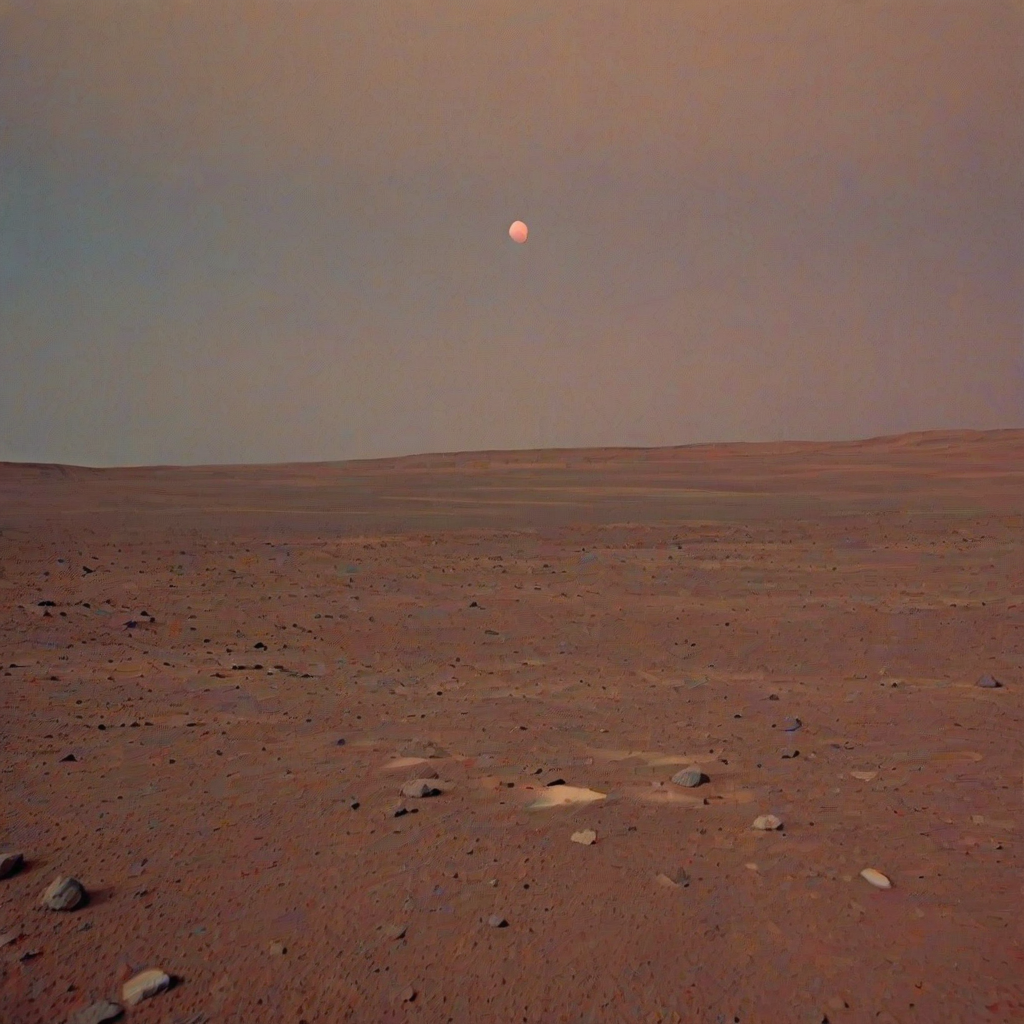
Mars is cold. The average temperature is minus sixty degrees Celsius. The atmosphere is ninety-five percent carbon dioxide, with a surface pressure less than one percent of Earth's. The soil contains perchlorates that would be toxic to most terrestrial organisms. There is no magnetic field to deflect solar radiation. A human standing on Mars without a suit would lose consciousness in about fifteen seconds.
And yet. Mars has water ice at its poles and almost certainly underground. It has a twenty-four-hour day. It has seasons. It has raw materials. And it is close enough to reach with existing technology in six to nine months.
The question is not whether we can go. The question is whether we should, and what we would become if we did.
The Case For
The case for becoming a multi-planet species is, at its core, the case against extinction.
Earth is one planet. One atmosphere. One biosphere. One target for an asteroid, a gamma-ray burst, a supervolcano, a pandemic, or the accumulated consequences of our own poor decisions. All of human civilization, all of human art, all of human love and memory and aspiration, exists on a single rock orbiting a single star. If something happens to that rock, everything is gone. Not diminished. Gone.
A species that exists on two worlds is twice as hard to kill as a species that exists on one. That is not philosophy. That is arithmetic.
The dinosaurs could not spread to a second world. They were confined by biology and physics to the one world that killed them. We are not. For the first time in the 3.8-billion-year history of life on Earth, a species has the technological capability to establish a self-sustaining presence on another planet. Whether we use that capability is a choice, and it is a choice that will look either wise or tragic in hindsight.
The Case for Caution
And yet I must be honest about the risks, because I spent my career insisting that honesty was more important than enthusiasm.
Mars is not a backup Earth. It is a world that will try to kill you every day, in every way, with a patience that makes the Sahara look hospitable. The engineering challenges of building a self-sustaining colony (not a research station, not a temporary outpost, but a place where humans are born, live, and die without resupply from Earth) are so far beyond our current capability that no serious engineer puts a timeline on it shorter than decades, and most say centuries.
The greater risk is that Mars becomes an excuse. "We will go to Mars" can become a reason not to fix Earth. If the ultra-wealthy begin to view Mars as an escape hatch, the political will to address climate change, nuclear proliferation, and ecological collapse may diminish. The message "we can always leave" is the most dangerous possible misreading of the multi-planet vision, because it converts urgency into complacency.
Mars is not an escape hatch. It is an expansion. And the expansion is only meaningful if the original home is worth preserving. You do not solve a house fire by building a shed.
What Mars Would Teach Us
Here is what I believe, and it is a belief grounded in the experience of the space program I devoted my life to:
Going to Mars would change us more than Mars would change for us.
Every time humans have expanded their range of exploration, the exploration has changed the explorers. The voyages of the fifteenth century changed European civilization more than they changed the continents Europeans reached. The Apollo program changed how humanity sees itself more than it changed the Moon. The photograph of Earth from lunar orbit, the first time humans saw their planet whole, triggered the environmental movement, the Endangered Species Act, and a transformation in how we understand our relationship to the biosphere.
Mars would do the same, but deeper. A human standing on Mars looking back at Earth would see what no human has ever seen: their home planet as a star. A pale blue dot in the Martian sky, no brighter than a bright star, carrying every person they have ever loved. That perspective would do more for planetary consciousness than a thousand environmental conferences.
And the challenges of keeping humans alive on Mars would teach us, by necessity, how to manage a closed ecological system. How to recycle every molecule of water and every breath of air. How to grow food without soil, without rain, without the ten thousand invisible services that Earth's biosphere provides for free and that we have never had to notice. Everything we learn about sustaining life on Mars applies directly to sustaining life on Earth. The two projects are not in competition. They are the same project, seen from different distances.
The Honest Position
I do not know whether humanity will become a multi-planet species. I hope it will. I believe the attempt is worth making. But I insist on honesty about what it requires:
It requires fixing Earth first, or at least simultaneously. A civilization that cannot manage one biosphere will not manage two.
It requires patience measured in generations, not electoral cycles. Mars is not a product launch. It is a civilizational commitment spanning centuries.
It requires international cooperation on a scale that has no precedent. Mars does not belong to any nation, and the first colony must not either.
And it requires the same quality that every great exploration has required: the willingness to go into the unknown, knowing that many of the questions do not yet have answers, and that the answers will change us in ways we cannot predict.
Mars is not a backup plan. It is a question. The question is whether a species that evolved on one world has the wisdom, the patience, and the honesty to live on another. The answer will define what we become.
Read Richard Feynman's angle: What the Equations Say About How Hard It Actually Is. The rocket equation is merciless. Here is exactly how merciless.
Read Buckminster Fuller's angle: The Logistics of Spaceship Mars. Closed-loop life support, geodesic domes under regolith, and every technology you need for Mars is one you need for Earth.
"For all its material advantages, the sedentary life has left us edgy, unfulfilled. Even after 400 generations in villages and cities, we haven't forgotten. The open road still softly calls."
Carl Sagan, The Cosmic Evangelist