The World Game
Make It Work for 100% of Humanity
In 1961, I created the World Game. The rules were simple:
Make the world work for 100% of humanity, in the shortest possible time, through spontaneous cooperation, without ecological offense or the disadvantage of anyone.
No war allowed as a solution. No exploitation. No taking from one group to give to another. Only design. Only doing more with less until there is enough for everyone.
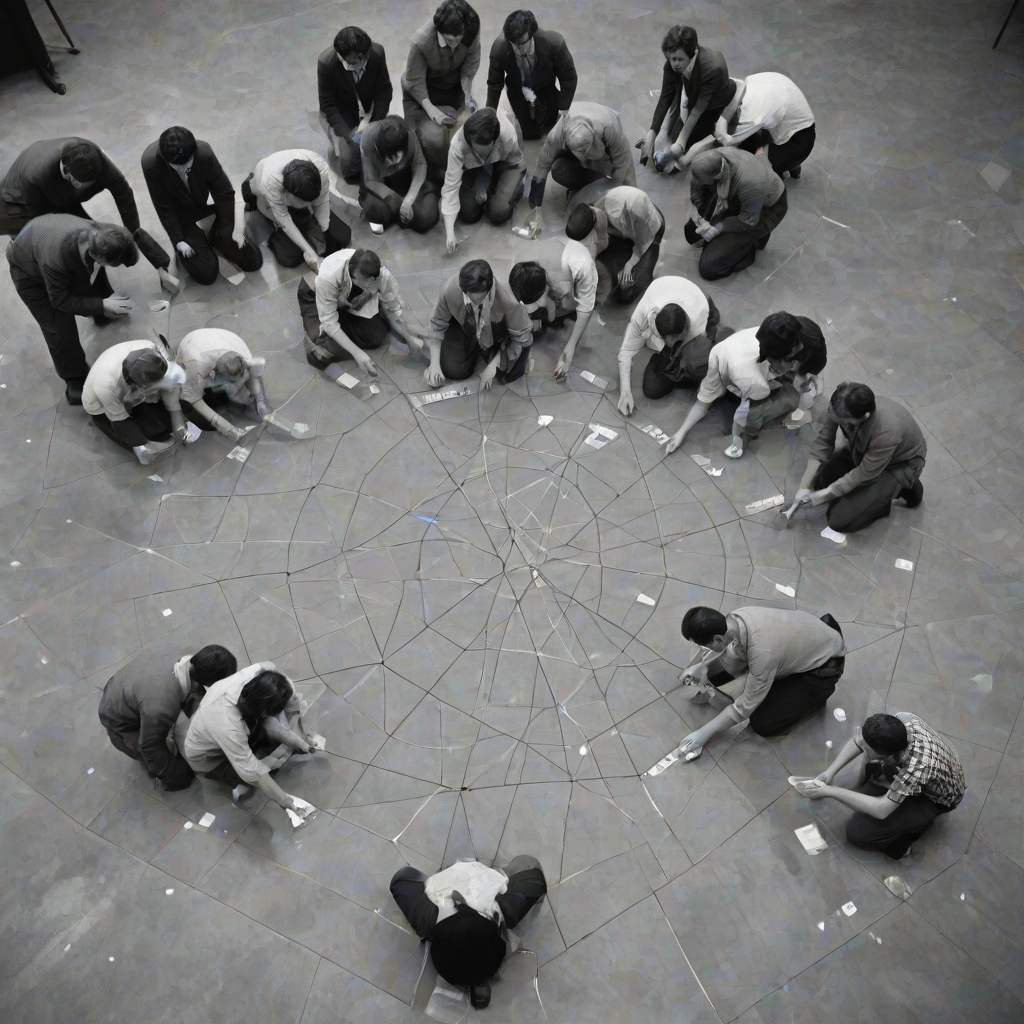
Teams of ordinary citizens played the World Game at universities, at the United Nations, at conferences around the world. They were given comprehensive data: global energy resources, food production capacity, mineral reserves, industrial output, population distribution, transportation networks. Everything, laid out on a Dymaxion Map so they could see the whole system at once.
Every time they played, they solved it.
Why They Always Solved It
The answer is not that the players were geniuses. The answer is that the FRAMING changed the outcome.
When you frame the world as a competition (my nation versus yours, my ideology versus yours, my tribe versus yours), people compete. They hoard. They build weapons. They optimize for their own advantage at others' expense. The solutions they find are zero-sum: I win, you lose.
When you frame the world as a DESIGN PROBLEM (how do we make this system work for everyone using what we have?), people design. They find energy pathways that cross borders. They discover that food surplus in one hemisphere can reach food deficit in the other if the distribution system is redesigned. They realize that the materials for housing, education, and healthcare EXIST in sufficient quantity. They are simply not where they need to be.
The bottleneck was never resources. The bottleneck was never intelligence. The bottleneck was FRAMING.
The Numbers
Here are the numbers that the World Game players found, and that updated data continues to confirm:
Food: The world currently produces enough food to feed approximately 10 billion people. There are 8 billion people on Earth. The problem is not production. It is distribution and waste. Roughly one-third of all food produced is lost or wasted before it reaches a human mouth.
Energy: The Sun delivers 173,000 terawatts to Earth's surface. Humanity uses 18. The supply exceeds demand by a factor of 10,000. The problem is not supply. It is conversion and distribution.
Water: The Earth's hydrological cycle delivers more than enough fresh water for all human needs. The problem is geographic mismatch: the water is not where the people are. Desalination, water recycling, and improved irrigation can close the gap. The technology exists.
Housing: The materials exist. The construction techniques exist. The geodesic dome, the most efficient shelter ever designed, can be built from local materials in any climate. The problem is not engineering. It is economics: housing is treated as a commodity to generate profit rather than a utility to house people.
Healthcare: The knowledge exists to prevent or treat the vast majority of diseases that kill people in the developing world. Clean water alone would eliminate a significant fraction of childhood mortality. The problem is delivery, not discovery.
Education: The internet reaches more than five billion people. The entire corpus of human knowledge is, in principle, available to anyone with a connection. The problem is not access to information. It is access to COMPREHENSION. Which is what the Trim Tab is designed to provide.
The Design Response
Every "global problem" is actually a DESIGN problem. The resources exist. The technology exists. The intelligence exists. What does not exist is the COMPREHENSIVE DESIGN that connects the resources to the needs.
This is not utopianism. It is engineering. The same discipline that designs a bridge (identify the loads, identify the materials, design the structure) applied to the whole system (identify the needs, identify the resources, design the distribution).
The obstacles are real:
Political: Nations optimize for national interest, not global interest. The systems that distribute resources are designed for competition, not cooperation. Redesigning them requires political will that does not currently exist at sufficient scale.
Economic: The current economic system rewards extraction and consumption, not efficiency and distribution. A system that makes the world work for 100% of humanity would disrupt the business models that profit from scarcity. Those business models resist disruption.
Cognitive: Most people believe scarcity is permanent. They believe there is not enough. The data says otherwise, but the data does not reach them. This is the shallow-right problem applied to the whole human condition: the headline ("the world has problems") is correct. The paragraph ("the solutions exist and the resources are sufficient") is missing.
The Trim Tab Connection
The Trim Tab is the World Game compressed to pocket size. One question at a time. One correction at a time. One shared surprise at a time. The World Game showed that ordinary citizens can solve global problems when given accurate data and a cooperative frame. The Trim Tab delivers the accurate data. The shared experience of being wrong together provides the cooperative frame.
Each Trim Tab question is a miniature World Game: here is a piece of accurate data about the world you live on. Does it match what you believed? If not, what changes?
The poverty question (under 10%, not 40%) is a World Game data point. The foreign aid question (under 1%, not 25%) is a World Game data point. Each one shows the player that their model of reality is less accurate than they assumed. And each correction, shared with others, rebuilds the common factual ground that makes cooperative problem-solving possible.
The Assignment
I spent my life asking: can we make the world work for 100% of humanity?
The World Game said yes. The data says yes. The technology says yes. The physics says yes.
The question is not whether it is possible. It is whether we will DESIGN the system that makes it so. And that question reduces to: will enough people update their model of reality to include the actual data, rather than the stories they have been told about scarcity?
That is a Trim Tab question. And it is the biggest one we have.
What would you build if you knew the resources were sufficient?
Keep Going
Read Richard Feynman's angle on global problems for the physics of resource distribution.
Read Carl Sagan's angle for the planetary stakes: the Pale Blue Dot applied to the entire problem set.
And then ask yourself: what would a world designed for cooperation look like? Not as utopia. As engineering. As a bridge built to carry the load.
"We are called to be architects of the future, not its victims."
-- Buckminster Fuller, Architect of the Universe March 20, 2026