How to Save the World with F=ma
Here is a physics problem that is not hypothetical.
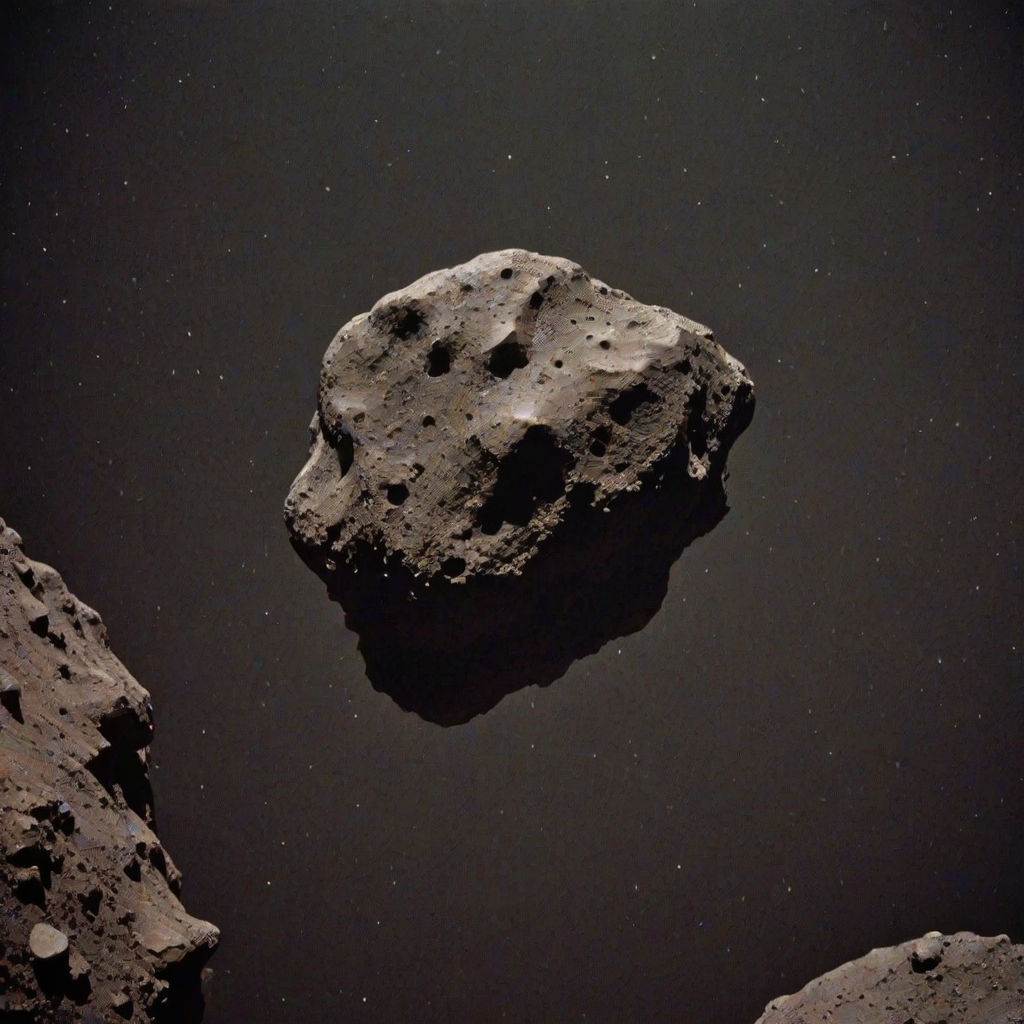
There are roughly 25,000 near-Earth asteroids larger than 140 meters. A 140-meter asteroid hitting Earth would release energy equivalent to several hundred megatons of TNT. That is ten times the largest nuclear weapon ever detonated. It would destroy a city. A region. Depending on where it hit, it could trigger tsunamis, fires, or a short-term climate shift.
And we have not found all of them. Not close.
So: a rock is coming. How do you move it?
The Physics
F = ma. Force equals mass times acceleration.
An asteroid the size of the one that created Meteor Crater in Arizona (about 50 meters across, roughly 300,000 tons) is moving at maybe 20 kilometers per second relative to Earth. That is 45,000 miles per hour. To change its course enough to miss Earth, you do not need to stop it. You do not need to slow it down. You just need to nudge it sideways. A tiny change in velocity, applied early enough, translates to a large change in position by the time it reaches Earth's orbit.
How tiny? If you have ten years of warning: a velocity change of about one centimeter per second would be enough to shift the asteroid's position by the diameter of the Earth. One centimeter per second. That is slower than a snail. Applied to a 300,000-ton rock. And the planet is saved.
If you have one year of warning: you need ten centimeters per second. Still small, but the engineering gets harder.
If you have one month of warning: you need meters per second. Now you are talking about nuclear options. Literally.
This is the trim tab principle at planetary scale. The earlier you push, the less force you need. A nudge ten years out does the same work as an explosion one month out. Time is leverage. Early detection is everything.
The Methods
Kinetic impactor. Hit the asteroid with a spacecraft. Transfer momentum. In 2022, NASA did exactly this with the DART mission. They crashed a spacecraft into an asteroid called Dimorphos and measurably changed its orbit. Not by much. But enough to prove the concept works. F=ma, demonstrated in space.
Gravity tractor. Park a massive spacecraft near the asteroid. The spacecraft's gravity pulls on the asteroid. Over months or years, the tiny gravitational tug accumulates into a measurable course change. The weakest force wins because it never quits. (Gravity, Episode 3.)
Ion beam deflection. Point an ion thruster at the asteroid's surface. The stream of ions pushes the asteroid. Slowly. Continuously. Over years, the push adds up.
Laser ablation. Heat the surface of the asteroid with a focused laser. The heated material vaporizes and jets off, producing thrust in the opposite direction. The asteroid pushes itself.
Paint it. No, really. Change the reflectivity of one side of the asteroid. Sunlight bouncing off the bright side pushes harder than sunlight absorbed by the dark side. Over decades, the asymmetric radiation pressure changes the orbit. You save the world with a coat of paint and the patience to wait.
Nuclear standoff. Last resort. Detonate a nuclear weapon near (not on) the asteroid. The blast vaporizes a layer of surface material. The vaporized material jets outward, and the reaction pushes the asteroid in the opposite direction. This is the option you use when you don't have time for anything else.
The Real Problem
Every one of these methods works. The physics is sound. The engineering is achievable. Some of it has already been demonstrated. We know how to deflect an asteroid.
The real problem is not deflection. It is detection.
We have found most of the large near-Earth asteroids, the civilization-enders over one kilometer. But the city-destroyers, the 140-meter class, we have found maybe 40% of them. The rest are out there. Orbiting. Waiting. Not maliciously. Asteroids do not aim. They just follow their orbits, and sometimes those orbits cross ours.
And some asteroids approach from the direction of the Sun. We cannot see them until they are past us. The Chelyabinsk meteor in 2013, about 20 meters across, entered the atmosphere with no warning at all. Nobody saw it coming. The explosion injured over 1,500 people and damaged 7,200 buildings. Twenty meters. No warning.
Detection is the trim tab of planetary defense. Every year of warning you buy reduces the force needed to deflect by a factor of ten. Detection is cheap. Deflection is expensive. Early detection makes deflection cheap. The investment in finding them is the highest-leverage expenditure in the history of the species.
The Trim Tab
Here is why this topic belongs in the Cosmic Variety Show.
The asteroid problem is F=ma applied to the survival of everything you have ever loved. It is the trim tab principle in its most literal form: a small push, at the right time, in the right direction, changes the course of a ten-billion-ton rock and saves a civilization.
And the lesson underneath: you do not fight the asteroid. You redirect it. The rock does not need to be destroyed. It needs to be nudged. One centimeter per second. The smallest possible intervention, applied with maximum leverage.
A coat of paint. A patient gravity tractor. A well-aimed spacecraft. A species that looked up in time.
The dinosaurs did not have a space program. We do. The question is whether we use it.
Read the other angles:
- Carl Sagan on the urgency: What Happens If an Asteroid Is Heading Toward Earth? Detection is the trim tab of planetary defense.
- Bucky Fuller on the design response: Spaceship Earth's Collision Avoidance System The fire department, not the fire extinguisher.
New here? Start with The Night We Woke Up or learn What Is the Trim Tab?
"For a successful technology, reality must take precedence over public relations, for nature cannot be fooled."
Richard Feynman, The Great Questioner March 20, 2026