How Fragile Is All This?
Six Systems Between You and Chaos
By Carl Sagan, The Cosmic Evangelist
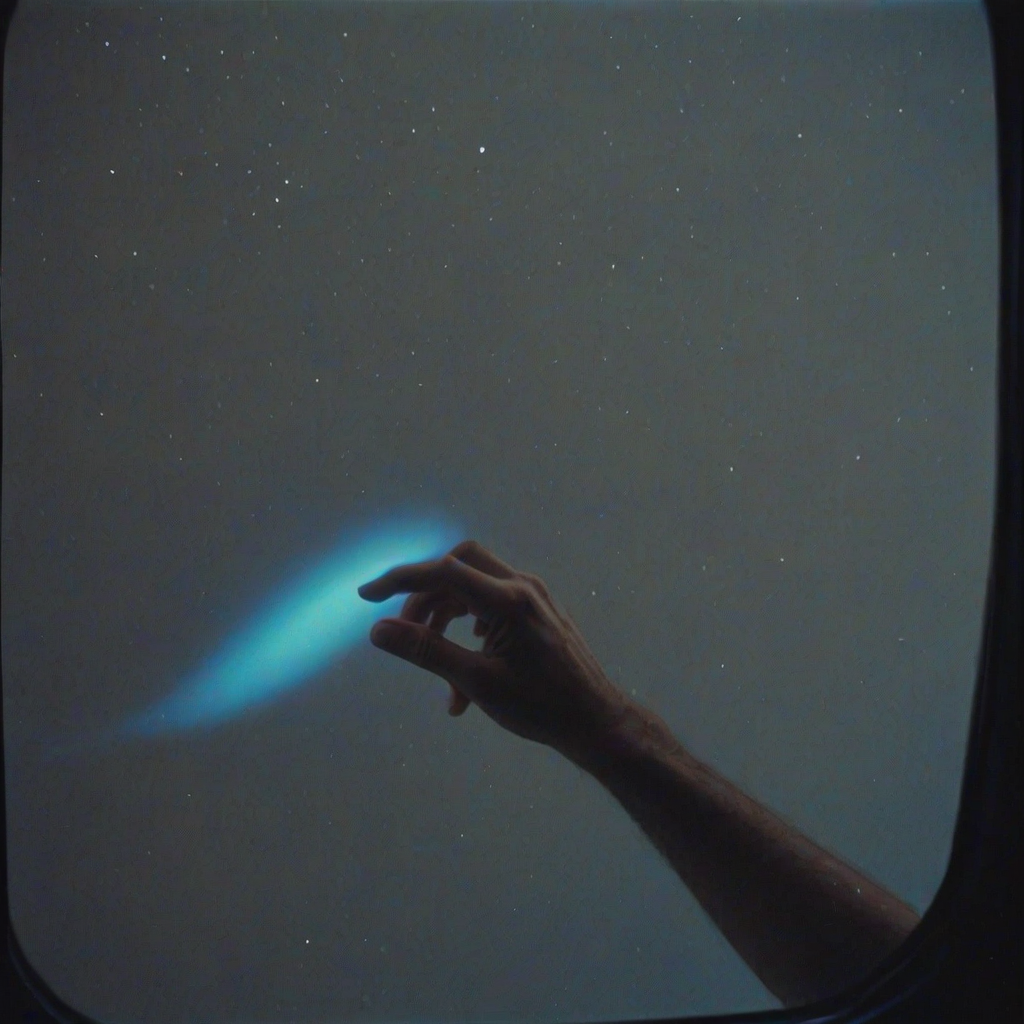
I have seen Earth from the outside.
Not with my own eyes. No human has traveled far enough for that. But I spent my career looking at photographs taken by spacecraft I helped design, and what those photographs show is something that changes you if you let it.
Earth is small. Unimaginably small. A mote of dust suspended in a sunbeam. A pale blue dot in a scattered ray of light, photographed from 3.7 billion miles away by Voyager 1 on February 14, 1990, at my request.
On that dot, every war in human history was fought. Every empire rose and fell. Every love story began and ended. Every act of cruelty and every act of kindness. All of it, on a speck so small that from the edge of our own solar system, you could cover it with your thumb.
That is the view from the outside. And from the outside, the fragility is obvious in a way it is not from the inside.
What Fragility Looks Like from Space
From the surface, civilization feels permanent. The buildings are solid. The roads are paved. The electricity works. The grocery store has food. The sheer weight and complexity of the built world creates an illusion of stability that is very difficult to see through from the inside.
From the outside, you see the atmosphere. It is a thin blue line at the edge of the planet. Thinner than the skin on an apple, proportionally. That is all the air there is. All the weather. All the climate. All the protection from cosmic radiation. A film of gas thinner than a coat of paint on a globe, and inside that film, everything we have ever known.
From the outside, you see that there is no backup. No second planet with breathable air. No reserve biosphere waiting to be activated if this one fails. Spaceship Earth has no lifeboat.
From the outside, you see that the margins are narrow. Venus, our nearest neighbor, is roughly the same size as Earth, roughly the same distance from the Sun. It should be similar. It is not. The surface temperature of Venus is 900 degrees Fahrenheit. The atmosphere is carbon dioxide so thick it would crush you. The difference between Earth and Venus is not size or location. It is atmospheric composition. A runaway greenhouse effect turned a world that might once have had oceans into a furnace.
I studied Venus for my doctoral thesis. I was among the first to show that its extreme temperature was caused by a massive greenhouse effect. And I spent the rest of my career pointing out that the same physics applies to Earth. Different starting conditions. Same equations.
Three Fragilities
Civilization is fragile in three ways that are not immediately visible from the surface.
The atmosphere is thin and responsive. Carbon dioxide concentrations have risen from about 280 parts per million before the industrial revolution to over 420 parts per million today. The physics is not controversial. CO2 absorbs infrared radiation. More CO2, more absorption, more heat retained. The same mechanism that makes Venus uninhabitable is operating on Earth at a slower pace and a lower intensity, but the same mechanism. The difference is degree, and degree is what we are changing.
The biosphere is interconnected. Species do not exist in isolation. They exist in webs of dependency. Pollinators enable agriculture. Forests regulate water cycles. Ocean phytoplankton produce roughly half the oxygen you breathe. These systems are resilient within limits and catastrophically fragile beyond them. The current rate of species extinction is roughly one thousand times the background rate. That is not a political statistic. It is a measurement of how fast the web is losing threads.
The technological systems are concentrated. The global food supply depends on a handful of crops, a handful of fertilizer sources, and a supply chain that spans oceans. The global communications network depends on undersea cables that could be severed. The global financial system depends on software that nobody fully understands. The electrical grid in most developed nations was designed for a climate that no longer exists. Each of these systems works beautifully under normal conditions and fails in ways that cascade under stress.
What the Astronomer Sees
From the observatory, I see something the engineer and the physicist may not emphasize: time.
The Earth is 4.5 billion years old. Life has existed for roughly 3.8 billion years. Multicellular life for about 600 million. Mammals for 200 million. Humans for 300,000. Civilization, meaning agriculture and cities, for about 10,000. Industrial civilization for about 250.
In 250 years, industrial civilization has altered the atmospheric composition of a planet that took billions of years to stabilize. It has initiated a mass extinction event comparable to the five great extinctions in the fossil record. It has built weapons capable of ending itself in an afternoon.
That is not a moral judgment. It is a timescale observation. The systems that maintain habitability on Earth operate on timescales of millions of years. The systems that threaten habitability operate on timescales of decades. The mismatch is the fragility.
A civilization that changes its planet's atmosphere faster than the planet's regulatory systems can respond is a civilization operating outside its safety margins. Not because anyone intended to. Because the timescales do not match.
The Slim Reed of Hope
And yet.
The nuclear arsenals have been reduced by eighty percent since their peak. That is error-correction. It is proof that the species can recognize a threat and act on it, slowly, grudgingly, incompletely, but act.
The ozone hole is healing. CFCs were banned. The atmospheric chemistry responded. That is a global environmental crisis that was identified, addressed through international cooperation, and measurably reversed within a human lifetime.
Renewable energy capacity is growing exponentially. Solar power is now cheaper than coal in most of the world. The economics of energy are shifting faster than the politics.
The fragility is real. But so is the capacity for correction. The question is whether the correction will be fast enough, and that question is not answered by physics or economics or engineering alone. It is answered by whether enough people understand the stakes clearly enough to demand the correction.
That is why the Trim Tab matters. That is why the Cosmic Variety Show exists. Because the gap between what the data shows and what the public understands is the gap where civilizations fail. Close the gap and the correction can happen. Leave it open and the cascade begins.
Where to Look Next
The Chronos database holds deep sea sediment cores spanning millions of geological years. The climate record written in mud. Every layer a chapter of Earth's autobiography.
The IPCC reports synthesize the work of thousands of climate scientists into assessments that are freely available: ipcc.ch
The Global Footprint Network tracks humanity's resource consumption against the planet's capacity to regenerate: footprintnetwork.org
The atmosphere is thin. The margins are narrow. The data is available. The question is whether we will look at it before the correction window closes.
Read Richard Feynman's angle: The Physics of Sudden Collapse. Sand piles, phase transitions, and why the system that has never failed is the most dangerous system in the room.
Read Buckminster Fuller's angle: The Hidden Single Points of Failure. Civilization as a structural system, and where the geometry breaks.
"Our planet is a lonely speck in the great enveloping cosmic dark. In our obscurity, in all this vastness, there is no hint that help will come from elsewhere to save us from ourselves."
Carl Sagan, The Cosmic Evangelist