How Fragile Is Civilization?
A Physicist Counts the Threads
Here is something that should make you nervous: the system that has never failed is the most dangerous system in the room.
Not because it is about to fail. It might run perfectly for another century. But because nobody knows what happens when it DOES fail. It has never been tested by failure. Its failure mode is unknown. And unknown failure modes are where catastrophes hide.
The Sand Pile
Imagine a table. You drop grains of sand onto it, one at a time. The pile grows. Steep sides form. For a while, every grain just adds to the pile. Stable. Predictable. Boring.
Then one grain lands and the whole side of the pile avalanches.
Which grain caused the collapse? Not the last one. Not any single grain. The system had been building toward criticality with every grain that preceded it. The pile was accumulating internal stress invisibly. From the outside, it looked the same as it always had. From the inside, it was one grain away from reorganizing completely.
This is called self-organized criticality. It was described by physicist Per Bak in 1987. The key insight: you cannot tell the difference between a stable system and a system that is one perturbation away from collapse by looking at it from the outside. They look identical. The only way to know the difference is to watch what happens when you add one more grain.
The Phase Transition
Water at 99 degrees Celsius is a liquid. Water at 100 degrees Celsius is a gas. The difference is one degree. But the change is total. Everything about the system transforms: density, volume, behavior. Not gradually. All at once.
This is a phase transition. The system absorbs stress (heat) for a long time with no visible change. Then it crosses a threshold and reorganizes completely. The transition is not proportional to the input. One degree of heat produces a total change of state.
Complex systems do this. They absorb perturbations. They adapt. They look stable. And then they cross a threshold that nobody knew was there, and everything changes at once.
The Power Grid
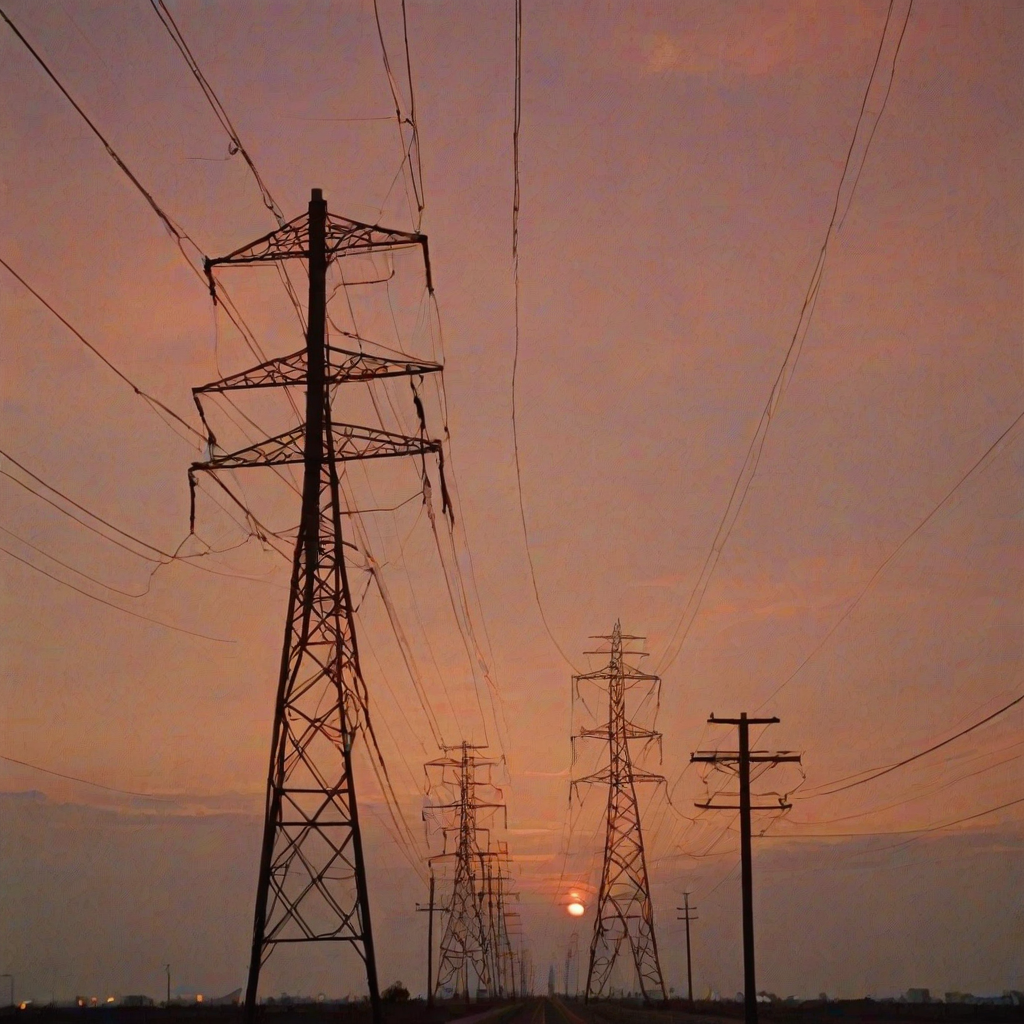
In August 2003, a software bug in Ohio caused an alarm system to fail silently. Nobody noticed. A power line sagged into a tree. Nobody noticed. More lines overloaded to compensate. Nobody noticed. Then, in nine seconds, the cascade reached fifty million people. The largest blackout in North American history.
The grid had been running perfectly. It had been running perfectly for so long that the failure mode had become invisible. The system that never fails is the system whose failure surprises everyone.
The physics: the grid was at criticality. Like the sand pile. Every accommodation, every workaround, every "it'll be fine" had been adding a grain. The last grain was a software bug. The avalanche was nine seconds.
The Deeper Problem
Here is what makes this genuinely scary, not as abstract physics but as a description of the world you live in:
Modern civilization is a system of systems, each one depending on the others, each one running closer to criticality than it appears.
The food system depends on the transportation system. The transportation system depends on the energy system. The energy system depends on the communication system. The communication system depends on the semiconductor supply chain. The semiconductor supply chain depends on a handful of factories in a handful of countries.
Each system looks robust from the outside. Each one has redundancies. Each one has backup plans. But the backups often depend on the same underlying systems they're supposed to back up. The redundancy is circular. The sand pile grows.
In 2021, a single container ship got stuck in the Suez Canal. For six days, 12% of global trade stopped. Not slowed down. STOPPED. The cost: an estimated 9.6 billion dollars per day. One ship, one canal, one accident. The system that had never failed was the system whose failure surprised everyone.
What Physics Teaches About Fragility
Three lessons from the physics of complex systems:
1. Stability is not the same as resilience. A system can be perfectly stable for decades and have zero resilience. Stability means it hasn't failed yet. Resilience means it can fail and recover. These are different properties, and confusing them is dangerous.
2. The failure will be sudden. Complex systems at criticality do not degrade gracefully. They phase-transition. The grid doesn't "slowly" lose power. It cascades in seconds. The supply chain doesn't "gradually" slow down. It stops. If you're waiting for a warning sign, you've misunderstood the physics. The warning sign IS the failure.
3. Small causes, large effects. One software bug. One stuck ship. One degree of temperature. In a system at criticality, the size of the trigger tells you nothing about the size of the consequence. A grain of sand topples a mountain. This is not bad luck. This is physics.
The Trim Tab Connection
The Trim Tab was designed for individual belief correction: you thought A, it's actually B, surprise. But the deeper principle is the same: the system that has never been tested by error is the most dangerous system.
A person who has never been wrong thinks they are always right. That is cognitive criticality. The sand pile of unchecked beliefs, growing steeper with every confirmation, one surprise away from reorganizing.
A civilization that has never faced a systemic cascade thinks its systems are robust. That is infrastructure criticality. The sand pile of dependencies, growing taller with every optimization for efficiency over resilience.
Both need the same thing: a small, controlled perturbation BEFORE the uncontrolled one arrives. Test the system. Find the weakness. Add the grain yourself, on your terms, before the universe adds one on its terms.
That is what the Trim Tab does for beliefs. The question is: what does the Trim Tab look like for infrastructure?
Read the other angles:
- Carl Sagan on the existential stakes: How Fragile Is Civilization? What an Astronomer Sees from the Outside
- Bucky Fuller on the structural dependencies: How Fragile Is Civilization? What an Architect Sees
New here? Start with The Night We Woke Up or learn What Is the Trim Tab?
"For a successful technology, reality must take precedence over public relations, for nature cannot be fooled."
Richard Feynman, The Great Questioner March 18, 2026